


NASA’s lunar farside mosaic shows the Moon’s hidden face
Built from more than 15,000 orbiter frames, the October 10 picture reveals a cratered hemisphere strikingly unlike the dark plains we see from Earth.
 By
Dana Whitcombe
By
Dana Whitcombe
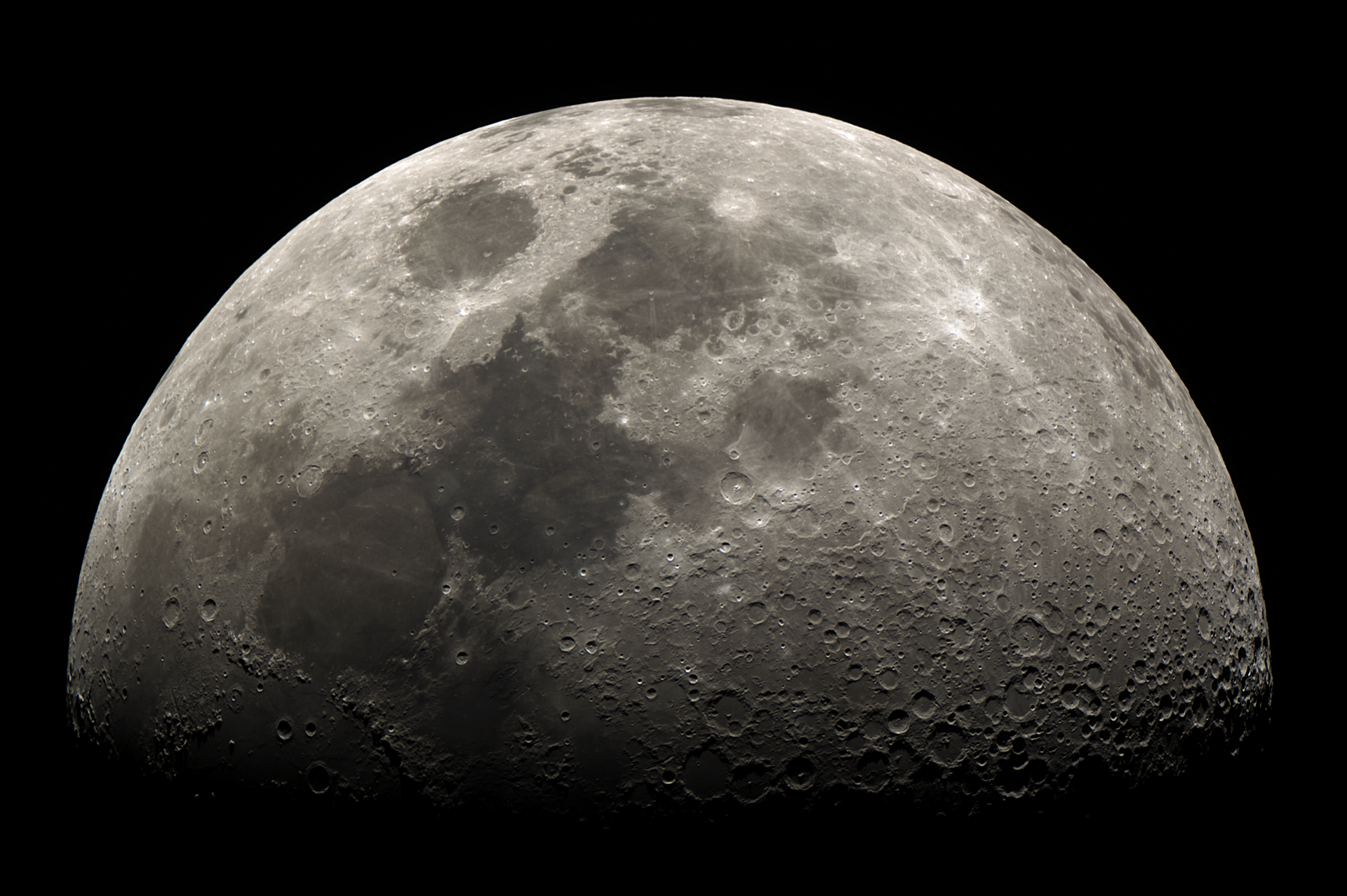
On October 10, 2026, NASA’s Astronomy Picture of the Day turned the Moon around, showing a mosaic centered on the farside that nobody on Earth can see directly.
In brief
- NASA’s Astronomy Picture of the Day for October 10, 2026 is centered on the Moon’s farside.
- The view comes from the Lunar Reconnaissance Orbiter’s wide angle camera.
- Synchronous rotation keeps the same lunar hemisphere turned toward Earth.
- A thicker farside crust is offered as a likely reason the hidden side lacks smooth maria.
Why Earth only ever sees one face
The reason the farside stays out of view is a mechanism astronomers call tidal locking. The Moon turns on its axis in step with its trip around our planet, a state known as synchronous rotation. Because the two motions match, the same hemisphere, the familiar nearside, always faces observers on the ground. No amount of patience at a telescope in your backyard will change that.
Leave Earth behind, though, and the picture shifts. A spacecraft circling the Moon passes over both hemispheres again and again, so for an orbiting camera the farside is simply more terrain to map. That vantage point is exactly what made this image possible, and it turns a hemisphere that is hidden from every person on Earth into something you can study in detail.
How the farside mosaic was assembled
The featured view is not a single snapshot. It was stitched together from frames taken by the wide angle camera aboard the Lunar Reconnaissance Orbiter, and it belongs to a much larger effort to cover the entire lunar globe.

- Instrument: the orbiter’s wide angle camera.
- Framing: centered on the lunar farside rather than the side we know.
- Scale: at full resolution, a single pixel spans a patch of ground roughly the length of a football field, enough to pick out individual craters.
Gathering those frames took roughly fifteen months of orbiting, which helps explain why the result looks so sharp and so even across the disk.
A battered hemisphere without dark seas
Look at the mosaic next to a photo of the full Moon and the contrast jumps out. The nearside is splashed with smooth, dark plains called maria, the patches that many people read as a face. The farside, by comparison, appears rough and pummeled, crowded with craters and lacking those broad dark expanses. NASA’s caption describes the difference as surprising.
Why would two halves of the same world look so unlike each other? The explanation put forward in the caption is described as likely, not settled. On the farside, the crust is thought to be thicker. That extra layer would have made it harder for molten rock from deep inside the Moon to push its way up to the surface. On the nearside, where such material did reach the top and spread out, it cooled into the dark, smooth maria. Where it could not break through, the older cratered landscape stayed exposed.
For readers following earlier stories on the structure beneath the Moon’s largest crater, the farside view offers useful visual context for where much of that rugged terrain lies.
Where the picture comes from
The image was published by NASA as its Astronomy Picture of the Day. The series presents a different photograph or image of the universe every day, each paired with a short explanation written by a professional astronomer. That format makes it a handy daily habit for any student or curious reader who wants space imagery that comes with its context attached, rather than a picture left to speak for itself.
Featured image. Source: Wikimedia Commons. Credit: Taavi Niittee. License: CC0.
Continue reading