


| IN A NUTSHELL |
|
In 2018, a groundbreaking experiment involving microscopic worms was launched into orbit to explore the profound impacts of microgravity on biological systems. This mission aimed to unravel the mystery of how the absence of gravity affects the human body, particularly focusing on muscle degradation, a critical concern for long-duration space travel. The findings from these experiments are not only shedding light on the physiological changes that occur in space but are also paving the way for future research that may have significant implications for human health both in space and on Earth.
The Impact of Microgravity on Muscle Health
Microgravity presents a unique challenge to the human body, particularly affecting muscles. During extended stays on the International Space Station, astronauts can lose up to 40% of their muscle strength, a phenomenon that mimics decades of aging. This rapid decline in muscle strength poses a significant risk to astronaut safety and mission success, necessitating a deeper understanding of the underlying biological processes.
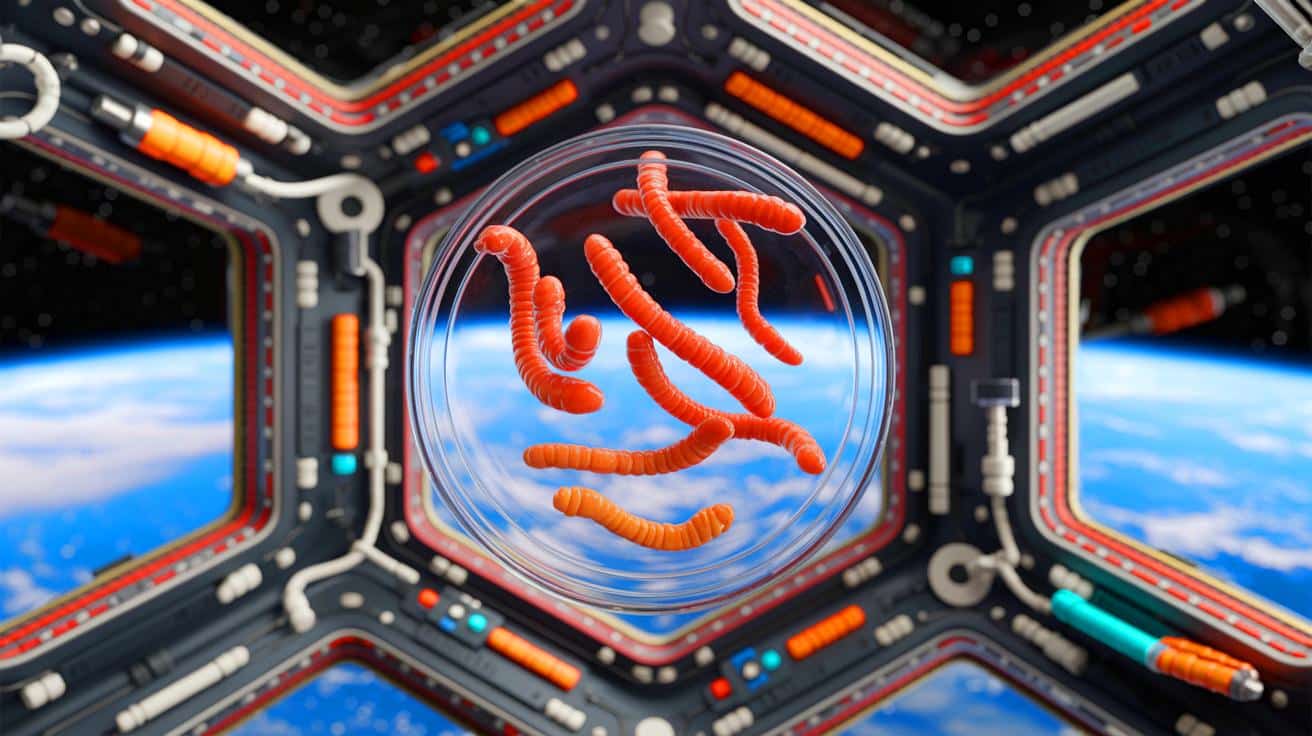
The 2018 Molecular Muscle Experiment, spearheaded by researchers from the United Kingdom, utilized the tiny Caenorhabditis elegans worms to investigate these changes. Despite their minute size, these worms serve as excellent models due to their cellular similarities to human muscle cells. The experiment revealed that in microgravity, crucial genes responsible for muscle function and energy production showed reduced activity, leading to observable muscle weakening.
“The results helped researchers understand why astronauts lose strength so quickly,” highlighting the significance of these findings in guiding future protective measures for space travelers.
Innovations in Space Research Technology
Building on the insights gained from the initial worm experiments, a new mission is underway. Collaborating teams from the University of Exeter and the University of Leicester have developed the Fluorescent Deep Space Petri Pod, a sophisticated laboratory designed to operate in the harsh conditions of space. Compact yet powerful, this device is equipped to monitor the biological responses of living organisms in real time.
The device is scheduled for launch in April 2026, with its initial operations inside the International Space Station before transitioning to open space. This advancement allows researchers to observe how organisms like the glow-emitting worms adapt to vacuum, radiation, and weightlessness. This capability reflects decades of engineering expertise and positions the United Kingdom as a leader in space life sciences.
“Performing biology research in space comes with many challenges but is vital to humans safely living in space,” noted Professor Tim Etheridge, emphasizing the importance of this endeavor.
Potential Discoveries and Broader Implications
The study of muscle decline in space is not only crucial for the safety of astronauts but also offers insights into muscle-related conditions on Earth. The rapid life cycle of worms enables scientists to observe multiple generations quickly, providing a dynamic model for understanding muscle degradation.
Dr. Amanda Collis from the Biotechnology and Biological Sciences Research Council highlights the collaborative nature of this research. It has the potential to inform new treatments for muscular dystrophy and other metabolic diseases. The knowledge gained from these studies could lead to improved healthcare strategies for aging populations and those suffering from muscle-wasting conditions.
These efforts also set the stage for future manned missions to Mars and beyond, where maintaining muscle health will be critical. By understanding the molecular mechanisms of muscle weakening, scientists can develop more effective countermeasures to protect astronauts during extended spaceflights.
Long-Term Benefits for Earth and Space
The research conducted with these microscopic worms underscores a larger narrative about the human body’s reliance on gravity. By studying the physiological changes that occur in its absence, scientists can better understand the fundamental processes governing muscle health and endurance.
The implications of this research extend far beyond space exploration. Insights gained from these studies could revolutionize treatments for muscle degeneration due to aging and disease, offering hope for improved rehabilitation and quality of life. Furthermore, they could lead to innovations in athletic training and performance, as well as new strategies for managing metabolic disorders.
“The findings from these worm studies may lead to better ways to protect muscle strength during long space missions,” which could transform the future of human space exploration.
As we continue to explore the final frontier, the lessons learned from these pioneering worm experiments will shape our understanding of human biology in unprecedented ways. How might these discoveries influence not only our journey to the stars but also our approach to health and wellness on Earth?


Wow, using worms to study muscle health in space? That’s a twist! 🐛
Wow, who knew worms could help us reach Mars! 🚀
How do these findings apply to people with muscle-related diseases on Earth?
Really interesting article. Will these findings actually help with muscle diseases on Earth?
Great article! It’s fascinating to see such innovation in space research.
Are there any risks of these worms mutating in space? 🐛
So, worms are leading the way for human space travel. Who knew? 😂
So, basically, astronauts need to work out even more in space? 😄
Could these studies help improve astronaut diets to counter muscle loss?
Great read! Thanks for sharing such fascinating insights. 🙏
I’m curious about the ethical implications of sending living organisms into space.