



| IN A NUTSHELL |
|
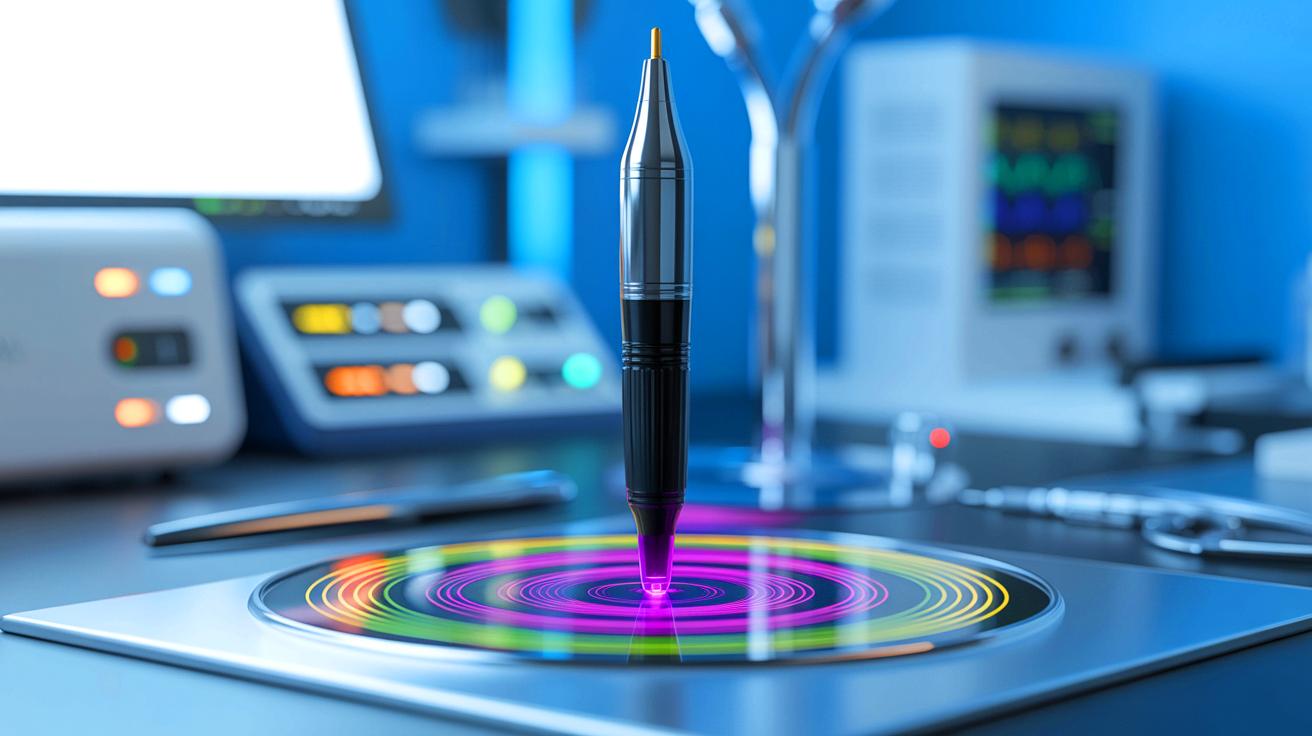
In the world of medical diagnostics, a simple yet innovative tool has emerged that could revolutionize the early detection of Parkinson’s disease. Researchers have developed a high-tech pen designed not just for writing, but for capturing the subtle hand movements associated with the early stages of this neurological condition. Led by Jun Chen from UCLA’s Samueli School of Engineering, the team’s work focuses on creating an affordable and accessible means of diagnosing Parkinson’s before its more obvious symptoms manifest. This pen, with its unique ability to sense motion and convert it into data, holds the promise of transforming how this complex disease is identified.
The Mechanics Behind the Pen
At the heart of this groundbreaking device is a silicone-based magnetoelastic tip, which changes its magnetic properties when bent or moved. This feature, combined with ferrofluid ink containing magnetic nanoparticles, allows the pen to detect even the slightest hand movements. These movements generate magnetic changes that the pen’s conductive yarn coil captures, converting them into valuable data.
The self-powered nature of the pen is a significant advantage. Unlike other diagnostic tools, it does not require external power sources like batteries or cables. Instead, the act of writing generates small amounts of energy that are then harnessed as data. This data is sensitive enough to detect minute tremors or micro-delays in motion, which are often early indicators of Parkinson’s disease.
Such precision is critical, as early motor symptoms of Parkinson’s are typically too subtle to be noticed by the naked eye. By capturing these early signs, this pen could potentially enable a quicker response to the disease, facilitating early intervention and treatment.
Clinical Study Offers Real-World Promise
To evaluate the effectiveness of their invention, the UCLA team conducted a pilot study involving 16 participants, three of whom had been diagnosed with Parkinson’s. The rest were healthy individuals without known motor issues. During the study, participants used the pen to perform writing tasks, while a one-dimensional convolutional neural network analyzed their handwriting signals.
This machine learning model is adept at identifying subtle patterns in time-series data, such as hand tremors or changes in speed over time. The results were impressive, with the system correctly identifying Parkinson’s patients with an average accuracy of 96.22%. This level of precision, even in a small-scale study, highlights the potential of the pen as a diagnostic tool.
Jun Chen emphasized the significance of detecting subtle motor symptoms that are unnoticeable to the naked eye. “Our diagnostic pen presents an affordable, reliable, and accessible tool,” Chen stated, underscoring its potential to be used across diverse populations and in resource-constrained settings.
Why Earlier Detection Matters
Parkinson’s disease is characterized by the degeneration of dopamine-producing neurons, which are critical for smooth muscle function. By the time noticeable symptoms like tremors or balance issues appear, a significant portion of these neurons may already be lost. This underscores the importance of early detection.
Current diagnostic methods largely depend on observable symptoms and clinical evaluations. Advanced techniques, such as brain imaging or biomarker blood tests, provide deeper insights but are costly and typically available only at specialized centers. These constraints pose significant challenges for individuals in rural or underserved areas.
The introduction of a low-cost, portable diagnostic device like this pen could dramatically change the landscape. It could be utilized in small clinics, primary care offices, or even at home, allowing for more timely and accessible diagnostics. A simple handwriting test could become a routine part of annual health check-ups, providing a proactive approach to managing the disease.
The Future of Self-Powered Diagnostics
This innovative pen represents a broader trend in medical research: leveraging everyday actions to uncover hidden health issues. Writing is a complex task that engages multiple muscles, nerves, and brain pathways. As such, deviations in handwriting style, speed, or pressure can serve as indicators of underlying neurological conditions.
Beyond Parkinson’s, the pen has the potential to detect other movement disorders, such as essential tremor, multiple sclerosis, or even early signs of dementia. Its self-sufficient design, which requires no external power, makes it especially suitable for areas with limited access to electricity. Despite its simplicity, the pen delivers high-quality data, making it both advanced and accessible.
For patients, this tool offers greater control over their health, with early detection leading to timely care and potentially slowing disease progression. For healthcare providers, it presents a powerful new method for screening that is both accurate and frequent. The UCLA team plans to refine the technology further, expanding its applications to other neurological conditions through larger clinical trials.
As the intersection of technology and healthcare continues to evolve, tools like this pen illustrate that innovation doesn’t always require complexity. Sometimes, the future of medical diagnostics begins with something as simple as putting pen to paper. Could this signify a new era in early disease detection and personalized healthcare?