


Time Travel Sparks Memory Loss: How Journeys Through Time Could Erase Your Past and Reshape Your Future
 By
Dana Whitcombe
| IN A NUTSHELL |
|
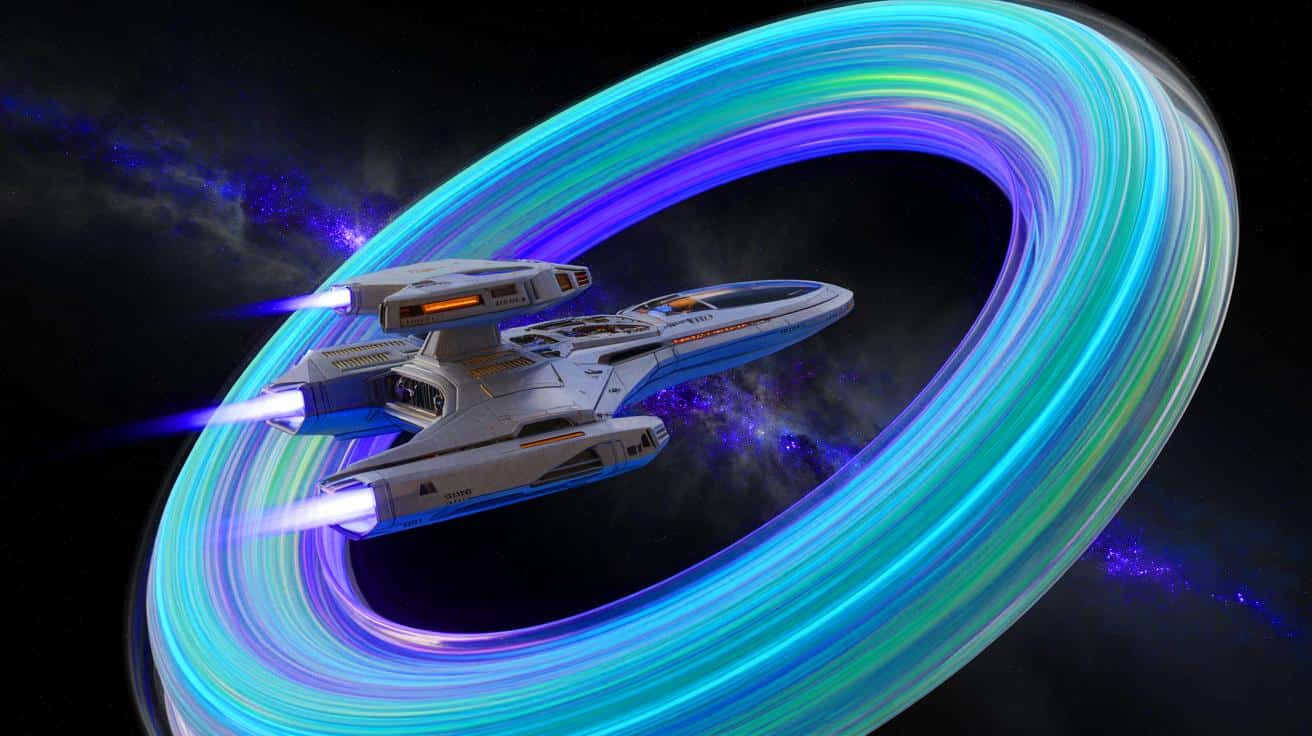
The idea of time travel has long captured the human imagination, inspiring countless stories of adventure and discovery. However, recent research suggests that the reality of time travel might be far less dramatic than fiction portrays. Instead of altering history or embarking on grand adventures, travelers might find themselves in a loop that resets everything, including their memories. This article delves into the scientific exploration of closed timelike curves, a theoretical concept that offers a new perspective on time travel.
How a Time Loop Shapes Your Experience
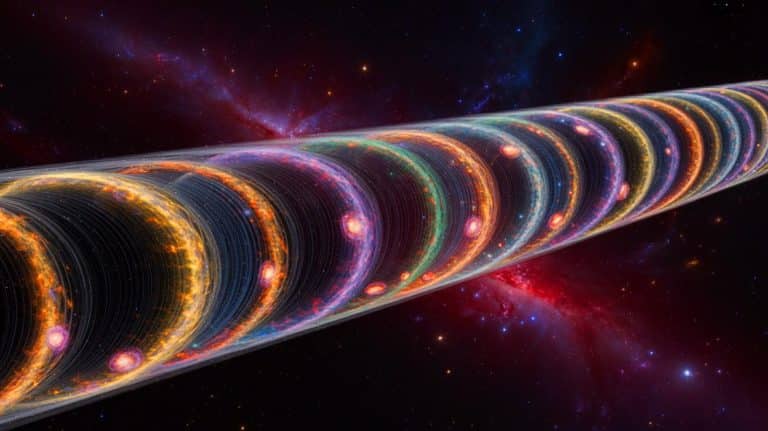
In the context of time travel, a closed timelike curve presents a unique journey through spacetime. The concept involves a path that circles back to the point where it began, theoretically allowing travelers to return to their starting moment. This notion emerges from certain solutions to Einstein’s field equations, which describe the fabric of spacetime. However, the experience of such a journey might not align with popular expectations.
Instead of meeting a younger version of oneself or carrying memories across the loop, the research indicates that travelers’ internal states remain constant. The physics inside the spacecraft adheres to quantum mechanical principles, ensuring that by the time the loop is completed, everything returns to its initial state. This self-consistency means that the internal world of the traveler resets, preventing the creation of paradoxes or inconsistencies within the timeline.
The physics of a closed timelike curve ensures that the beginning must match the end, eliminating paradoxes.
A Universe Where the Clock Turns Sideways
The research situates the thought experiment within a rotating universe that mirrors a Gödel-like geometry. In this scenario, the ship’s angular direction serves as the time for passengers. The periodic nature of this direction ensures that the ship returns to its original position after a full rotation. Quantum mechanics demands that the internal dynamics of the ship follow suit.
Wigner’s theorem, which ties spacetime symmetries to quantum evolution, enforces strict conditions on the ship. After a complete circuit, the spaceship’s energy distribution and physical states must mirror their initial values. This requirement effectively eliminates classic time travel paradoxes, such as encountering one’s future self or altering past events. Nature, through its laws, maintains the loop’s integrity by preventing any contradictions.
Natural laws prevent the possibility of meeting your future self by ensuring consistency within the time loop.
Why Energy Turns Into Evenly Spaced Steps
The symmetry within a closed timelike curve leads to a fascinating consequence: internal energy levels within the ship must conform to evenly spaced steps. These steps are dictated by the loop’s duration, with longer loops resulting in smaller steps and shorter loops producing larger gaps. Consequently, any internal process must repeat precisely after one cycle.
Even the ship’s clocks must adhere to this constraint. A reliable clock must complete an exact number of ticks during the loop. Should the loop’s period not equate to an exact number of seconds, microscopic adjustments would ensure the clock resets at the loop’s conclusion. Although these adjustments are imperceptible, they guarantee that everything aligns with the loop’s requirements.
The loop’s symmetry dictates that all internal processes, including clocks, must reset with precision.
How Entropy Creates Two Arrows of Time
Entropy, the measure of disorder, usually dictates the forward direction of time. However, within the confines of a closed timelike curve, entropy behaves differently. The system must return to its starting point, preventing entropy from increasing indefinitely. The path contains distinct points of lowest and highest entropy.
From the lowest entropy point, entropy rises toward the highest point in both directions. This creates two paths that diverge from a common origin. As Lorenzo Gavassino, a mathematician, explains, this results in the reversal of all thermodynamic processes, including memory formation and aging. The system retraces its steps, reversing everything from biological processes to brain function.
The closed timelike curve enforces a reversal of entropy, impacting everything from body chemistry to memory.
What Happens to Your Memory Inside the Loop
The implications of time travel within a closed timelike curve extend to personal experiences, particularly memory. As the loop approaches its end, any memories or changes accumulated during the journey vanish. Whether it’s a fact learned or a note written down, all alterations dissolve, leaving travelers as they were at the loop’s start.
From the traveler’s perspective, the journey seems nonexistent. The ship completes the circuit, returning to the initial moment without any recollection of what transpired. This phenomenon applies not only to the travelers but also to the ship’s systems and instruments, all of which experience a complete reset.
Within the loop, memories and changes vanish, leaving travelers unchanged and unaware of the journey.
The exploration of closed timelike curves offers an intriguing glimpse into the potential realities of time travel. While such loops may remain theoretical, the research sheds light on the interaction between quantum mechanics and spacetime. The results challenge our understanding of paradoxes, causality, and the nature of time itself. As science continues to probe the mysteries of the universe, one question remains: How might future discoveries transform our perception of time and reshape our understanding of reality?
Continue reading