



| IN A NUTSHELL |
|
In recent years, the challenge of safely powering medical implants and underwater electronics has captured the attention of researchers worldwide. Traditional methods like electromagnetic induction or radio frequency waves, while effective for surface devices like earbuds or phones, falter when applied to devices inside the human body or underwater. The emergence of ultrasound technology as a viable solution marks a significant breakthrough. Unlike radio waves, ultrasound waves can traverse biological tissue more effectively without being absorbed or causing harm, making them suitable for medical applications. This innovation promises to revolutionize the way we power wearable devices and implanted medical electronics, offering safer and more reliable energy solutions.
Revolutionizing Medical Implants with Ultrasound
The recent development of a flexible, biocompatible ultrasonic receiver by the Korea Institute of Science and Technology (KIST) in collaboration with Korea University represents a pivotal moment in medical technology. This receiver can bend and stretch in tandem with the human body, converting sound waves into usable electrical power. The implications are vast, with potential applications ranging from pacemakers and neurostimulators to underwater sensors and marine drones. Dr. Sunghoon Hur of KIST explained, “Through this research, we have demonstrated that wireless power transmission technology using ultrasound can be applied practically.” This advancement not only enables continuous power supply to critical medical devices but also opens new avenues for miniaturization and commercialization, as the team seeks to accelerate the practical application of the technology.
Traditional concerns about energy transfer through skin and tissue are addressed by this novel use of ultrasound. The technology’s ability to bypass the issues associated with electromagnetic fields makes it particularly suitable for the human body. By utilizing this method, researchers can ensure devices receive the necessary power without compromising patient safety or device efficiency.
How the New Receiver Works
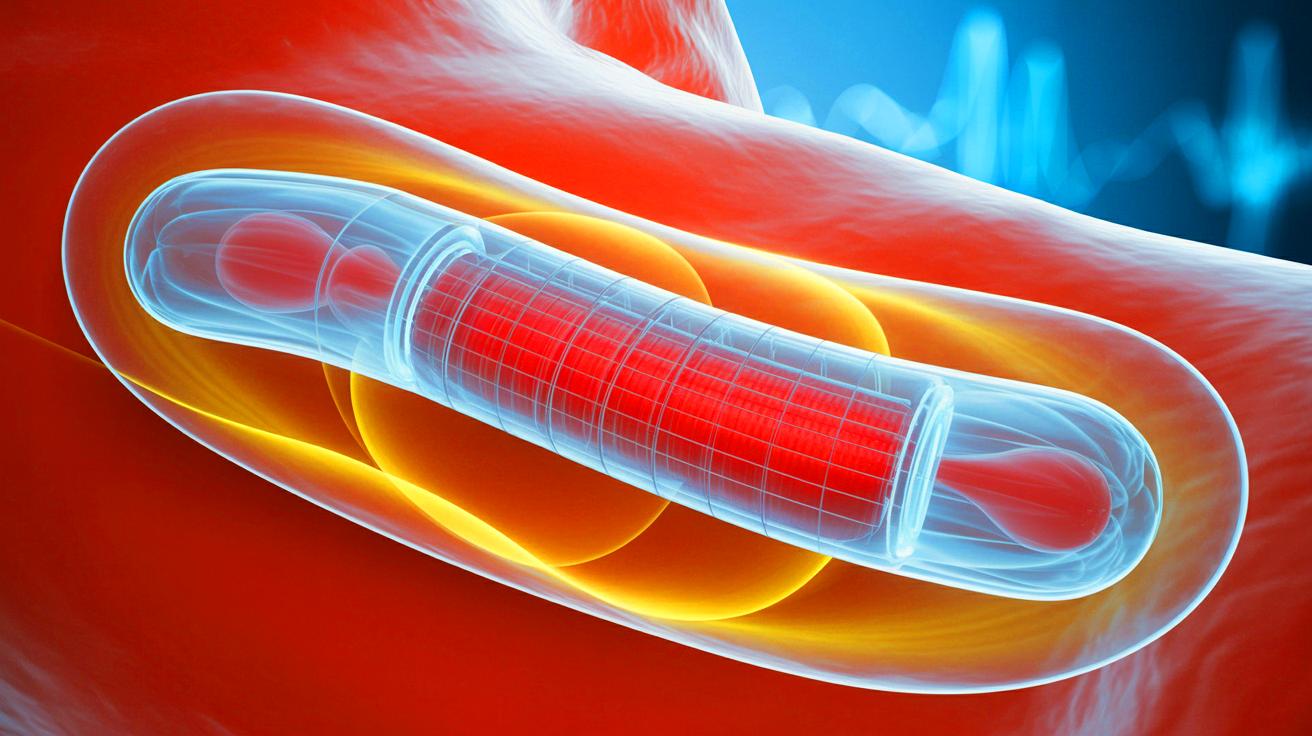
At the core of this innovation is a triboelectric nanogenerator (TENG), which, when paired with ultrasound waves, converts mechanical energy into electricity. This process occurs within a stretchable, flexible layer composed of advanced polymers. The dielectric-ferroelectric boosted ultrasonic TENG (US-TENGDF-B) marks a significant improvement over previous designs, which were often too stiff or produced insufficient energy. The new design maintains effectiveness even when bent or twisted, a crucial feature for medical devices that need to conform to the body’s curves.
The research team achieved a power transfer of 20 milliwatts across 3 centimeters underwater and 7 milliwatts at a depth of 3 centimeters inside the human body. While these figures may seem modest, they are sufficient to power many medical implants, including pacemakers and sensors. The material’s layered design, featuring a combination of polyvinylidene fluoride-trifluoroethylene (P(VDF-TrFE)) and calcium copper titanate (CCTO), enhances charge capacity and energy capture from ultrasound. Sealed in a transparent, flexible PDMS coating, the device remains waterproof and body-safe, underscoring its readiness for practical use.
Putting Flexibility to the Test
One of the most impressive features of this ultrasonic receiver is its ability to adapt to the body’s movements and shifting positions. During testing, the researchers bent the receiver into various shapes, including concave and convex forms, to evaluate its energy output. Notably, the concave shape increased energy output by trapping more ultrasound waves, thereby enhancing performance. Conversely, the convex shape led to a slight decrease in output due to tension in the PFA film. Despite this, the device demonstrated robust performance across all forms, proving its adaptability to real-world conditions.
With a thickness of just 0.4 millimeters, roughly equivalent to four human hairs, the device fits snugly against tissues and organs, facilitating long-term use in implantable systems. The use of PU and PFA materials creates strong electrostatic interactions, optimizing energy production. The high negative charge from fluorine atoms in PFA and the positive charges from nitrogen-based compounds in PU form an ideal pairing for efficient energy generation.
The Science Behind the Boost
The enhanced triboelectric effect, a process where two materials generate electricity through rubbing or separation, is central to this technology. By incorporating ferroelectric materials with tiny dipoles that align in a specific direction under an electric field, the researchers have significantly improved energy generation. When these dipoles align with the electric field of the triboelectric layer, especially in a downward direction, the internal electric field strengthens, enhancing charge separation and energy output.
Tests revealed that the downward-polarized setup could generate up to 6.7 milliwatts of power and about 26 volts from a distance of 1.4 inches. This output is sufficient for short-term charging of implantable batteries deep within the body. The system’s performance surpasses older piezoelectric generators, which often relied on rigid, lead-based materials that could be toxic. By utilizing safer polymers, this new system offers greater flexibility and compatibility with sensitive tissues.
Looking Ahead: A New Era for Implants
The future of medical implants is poised for transformation as the development of the US-TENGDF-B promises to reduce the need for repeat surgeries, particularly for battery replacements. Such surgeries increase infection risk, patient stress, and healthcare costs. By enabling remote charging through skin and muscle, this technology could extend implant lifespan, benefiting devices like pacemakers, neurostimulators, and glucose sensors. Additionally, its potential applications extend beyond healthcare, offering solutions for powering underwater robots and long-term marine sensors.
The KIST and Korea University team aims to further miniaturize the receiver and enhance its energy output, paving the way for deeper body placement and extended periods between charges. As wireless ultrasound charging becomes more feasible, the ability to safely and reliably power implants and wearable electronics may soon become a standard practice. What other innovations might emerge from this technological frontier, redefining how we integrate technology with the human body?