



| IN A NUTSHELL |
|
In a significant leap forward for diabetes management, a new wearable device promises to revolutionize how the condition is monitored and treated. Developed by a team of researchers from Israel and China, this microneedle-based system allows for real-time, personalized care by tracking disease markers and medication levels without the need for blood samples. The painless device, which works through the skin’s interstitial fluid, offers critical insights into how a patient’s body responds to treatment. The research, published in Nature Communications, highlights the potential of this technology to improve the precision and efficiency of diabetes care, reducing the risk of improper dosing and its associated health complications.
A Closer Look at a Global Health Crisis
Diabetes affects over half a billion people worldwide, with numbers steadily increasing. In the United States alone, the Centers for Disease Control and Prevention (CDC) estimates nearly 40 million individuals are living with the condition. In Israel, approximately 435,000 people have been diagnosed, with an additional 200,000 likely undiagnosed. The United Nations classifies diabetes as a global epidemic due to its widespread prevalence and severe health implications.
Managing diabetes effectively requires maintaining blood sugar levels within a safe range and ensuring medications like metformin work as intended. Current monitoring tools are often invasive and provide only limited snapshots of a patient’s condition. They also fail to account for individual variations in how people process and respond to medications. This lack of precision can lead to dangerous spikes or drops in blood sugar levels, resulting in conditions like hypoglycemia or hyperglycemia.
Most diabetes treatments do not adjust for changes in metabolism, diet, or stress levels, adhering instead to standard dosing protocols. This approach can be inadequate, as it does not consider the unique physiological factors that affect how each patient responds to treatment.
How the New Technology Works
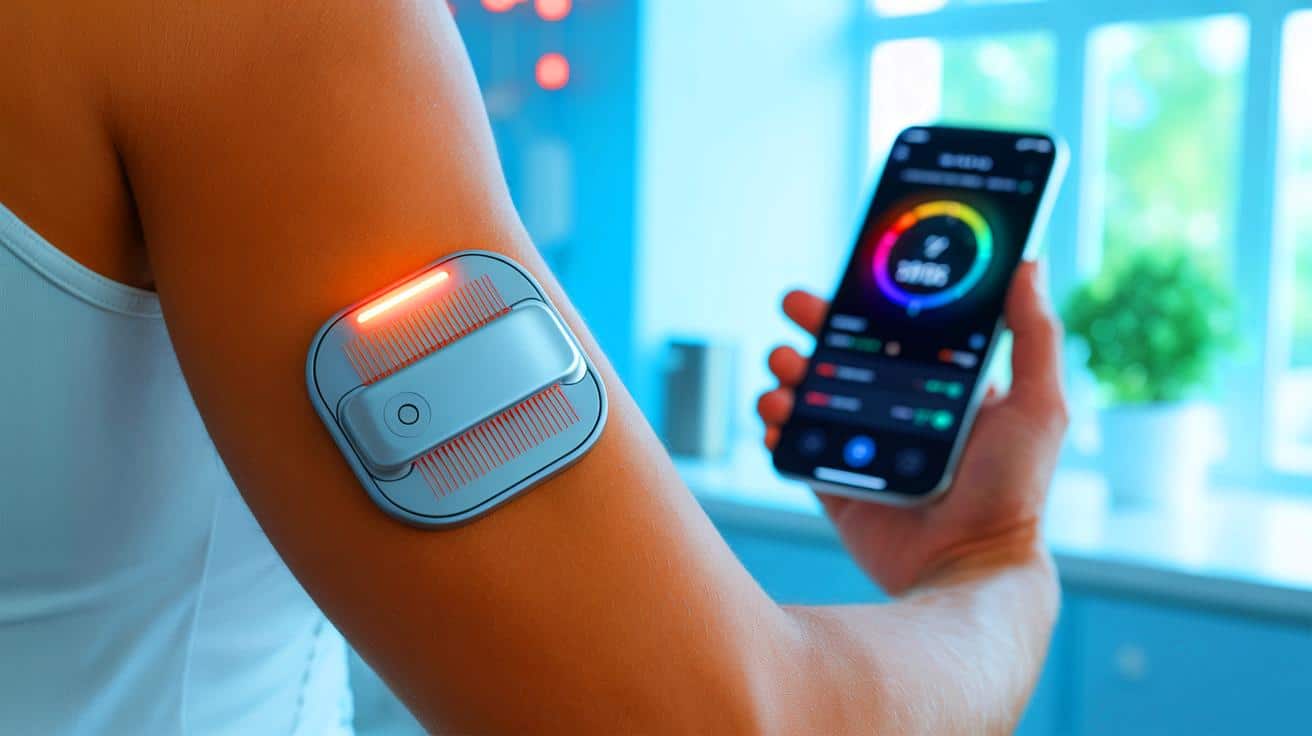
The Continuous Biomarker/Drug Monitoring (MCBM) system, based on microneedle technology, represents a significant advancement in diabetes management. This innovative device combines medical technology with mobile connectivity, resulting in a small, painless patch that adheres to the skin. It continuously samples interstitial fluid, the layer just beneath the skin’s surface.
The patch incorporates tiny, 3D-printed microneedles coated with nanoenzyme-based sensors. These sensors detect glucose and metformin concentrations with a high degree of accuracy. Instead of relying on blood tests, the system analyzes the skin’s interstitial fluid, which mirrors changes in the bloodstream almost instantaneously.
The data is transmitted wirelessly to a smartphone app via Bluetooth. The app not only displays the readings but also performs live pharmacokinetic and pharmacodynamic analyses. It adjusts recommendations based on how the user’s body is reacting to their illness and medication. In the event of unusual readings, such as a sharp drop in glucose levels or high drug concentrations, alerts are sent immediately. This allows for real-time management of the disease, as Professor Hossam Haick explains, “Through continuous monitoring of both the disease state and the treatment agent, the system allows unprecedented real-time control of treatment.”
Testing for Safety, Accuracy, and Impact
To validate the MCBM system’s effectiveness, researchers conducted initial tests in laboratory settings before proceeding to in vivo trials with diabetic mice. The system’s readings were compared to traditional tools like ELISA tests and handheld glucose meters. The MCBM not only aligned with these gold-standard tools but also detected fluctuations that older methods often missed.
One of the system’s most significant strengths is its ability to account for individual physiological differences. In animal trials, researchers demonstrated that the same dose of metformin produced varying drug profiles depending on factors such as the subject’s weight, age, and metabolic rate. Such variations are challenging to manage without continuous feedback. However, with the MCBM system, both doctors and patients can adjust treatments accordingly.
This capability is crucial in preventing complications like lactic acidosis, a rare but severe condition that can cause dizziness, nausea, and even liver failure. By enabling real-time dose adjustments, the technology may significantly reduce the risk of such side effects.
Looking Ahead to Broader Applications
Beyond diabetes, the team envisions their wearable platform being adapted to manage other chronic illnesses. Thanks to the customizable sensing chemistry, future iterations of the device could track medications and disease markers for conditions such as heart disease, epilepsy, or even cancer.
The system fits into the larger trend of smart healthcare, which integrates wearables, artificial intelligence, and precision pharmacology. As Professor Haick describes it, this marks “a new chapter in dynamic, personalized, real-time disease management.” Co-author Professor Changqing Yi adds, “This work brings us closer to an era where wearable devices will not only tell you what’s happening in your body but will also guide your treatment in real time.”
This innovation signals a shift in chronic disease management, moving from reactive symptom treatment to proactive wellness maintenance. The MCBM system empowers patients and healthcare providers to preemptively address potential health issues, offering a path toward more precise, safer, and more effective care.
The Future of Diabetes Care Is Personalized
The microneedle device developed by researchers in Israel and China demonstrates that real-time drug and disease tracking is both feasible and practical. Its straightforward design, seamless smartphone connectivity, and real-time analytics position it as a promising tool for millions living with diabetes.
As testing and development continue, wearable technology like this may become a standard component of managing various diseases. The limitations of one-size-fits-all treatments are increasingly evident, and patients need smart medicine that acknowledges their individuality. Such advances enable people to take charge of their health, making informed decisions day by day and in real time.
The advent of this technology raises important questions about the future of personalized medicine. How might further innovations reshape our approach to chronic disease management, and what implications will they have for healthcare systems worldwide?