




| IN A NUTSHELL |
|
Nuclear fusion, often hailed as the ultimate energy solution, promises a future of clean, powerful, and virtually limitless energy. Traditional fusion efforts typically involve large-scale machines that mimic the sun’s processes by subjecting plasma to extreme heat and pressure. Yet, a groundbreaking experiment at the University of British Columbia (UBC) is reimagining this approach. By developing a compact, room-temperature fusion reactor that fits neatly on a lab bench, UBC’s team aims to refine the fusion process itself. This novel experiment focuses on increasing the density of deuterium, a heavy form of hydrogen used as fuel, in hopes of improving fusion efficiency.
Revolutionary Approach to Fusion
The UBC team has devised a unique method that combines plasma field loading with electrochemical loading to pack more deuterium into a palladium metal target. This dual approach significantly boosts the likelihood of deuterium atoms colliding and fusing, which releases energy. According to Professor Curtis P. Berlinguette, the project’s lead researcher, “The goal is to increase fuel density and the probability of deuterium, deuterium collisions, and as a result, fusion events.”
What sets this method apart is its simplicity. Instead of relying on massive infrastructure, the researchers use just a single volt of electricity to achieve the compression of deuterium equivalent to 800 times Earth’s atmospheric pressure. This approach could potentially democratize fusion research, allowing smaller labs to experiment without the need for billion-dollar facilities.
The Thunderbird Reactor, the custom-built device used for these experiments, represents a significant leap in fusion technology.
It incorporates a plasma thruster, a vacuum chamber, and an electrochemical cell to maximize deuterium loading into the metal target. This method increased fusion rates by 15% compared to previous efforts, proving its potential for improving fusion processes in innovative ways.
How the Reactor Works
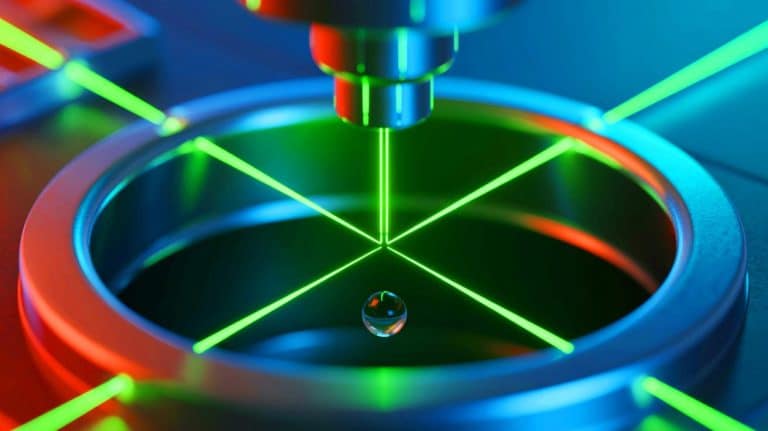
The Thunderbird Reactor, despite its modest appearance, is a powerhouse of innovation. Consisting of a plasma thruster, a vacuum chamber, and an electrochemical cell, each component plays a crucial role in loading deuterium into the palladium target. The plasma thruster injects high-energy ions into the metal, while the electrochemical cell applies a gentle voltage to push even more deuterium atoms into the target.
This dual loading method results in a higher local fuel concentration than seen in previous experiments. The increased fusion rates, though seemingly modest at 15%, are a significant achievement in the experimental fusion field. This advancement proves the concept and opens new avenues for improving fusion techniques.
Berlinguette explains, “Using electrochemistry, we loaded much more deuterium into the metal, like squeezing fuel into a sponge.” The focus was on detecting neutrons, a direct signature of fusion events, rather than measuring heat or energy output, which can be misleading. This precise measurement confirms the occurrence of fusion and validates the efficacy of the new approach.
Standing on Past Discoveries
Fusion science has a rich history, with the first successful deuterium-deuterium fusion experiment dating back to 1934. Early experiments involved bombarding metal targets coated in deuterium with high-energy ions. This foundational work paved the way for contemporary fusion research.
In 1989, two scientists controversially claimed they had achieved “cold fusion” by running deuterium oxide through a palladium electrode, measuring unusual heat output. However, their results were not replicable, and cold fusion quickly became a scientific taboo. Despite this, interest in the field never entirely dissipated.
In 2015, a group of researchers, including Berlinguette, supported by Google, revisited cold fusion under modern conditions. While they did not find evidence supporting earlier claims, they identified promising areas for further exploration. This renewed interest and funding from the Thistledown Foundation enabled UBC to develop a new experiment, avoiding past pitfalls by focusing on measurable fusion signals.
Toward an Accessible Fusion Future
The UBC experiment, while not achieving net energy gain, demonstrates that the path to practical fusion energy may not necessarily involve gigantic machines. The Thunderbird Reactor’s compact design makes fusion research more accessible, allowing universities and smaller labs to contribute to the field.
Berlinguette envisions a more collaborative future, stating, “We hope this work helps bring fusion science out of the giant national labs and onto the lab bench.” This approach integrates nuclear fusion, materials science, and electrochemistry, creating a platform for systematic experimentation with fuel-loading methods and target materials.
The potential impact of fusion is immense. Unlike nuclear fission, which produces long-lasting radioactive waste, fusion generates only a small amount of short-lived radiation, making it a safer alternative. If scientists can achieve energy-positive fusion, it could revolutionize global energy production, offering a clean, nearly limitless source of power.
UBC’s research marks a significant step forward in a field fraught with challenges and setbacks. By demonstrating that electrochemical loading can enhance fusion, albeit modestly, the team has opened new possibilities for future research. Will this innovative approach to fusion ultimately lead to a sustainable energy breakthrough?