




| IN A NUTSHELL |
|
The world of extended reality (XR) is rapidly evolving, with advanced virtual reality (VR) and augmented reality (AR) technologies increasingly becoming a part of our daily lives. As these technologies strive to create more realistic experiences, developing devices that can closely mimic human senses has become crucial. At the forefront of this innovation is the use of nanoparticles (NPs), which hold the potential to significantly enhance artificial sensory systems (ASS). Scientists are now highlighting a novel technique for producing these nanoparticles, which promises to revolutionize the way we experience digital worlds.
Cleaner, Customizable Nanoparticles
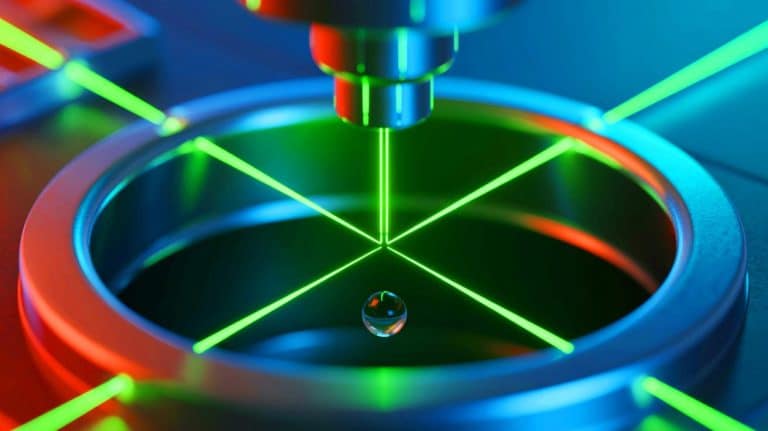
To address the challenges faced by traditional nanoparticle production methods, researchers have introduced laser ablation in liquids (LAL) as a groundbreaking alternative. This technique involves directing extremely short pulses of laser light at solid metals submerged in liquid, resulting in the production of ultra-clean, customizable nanoparticles. Unlike conventional methods, LAL doesn’t require harsh chemicals, surfactants, or complicated post-processing, thereby eliminating unwanted residues or contaminants that could impair device performance.
According to Prof. Sungjun Park from Ajou University, “Laser ablation in liquids offers a clean and scalable way to produce high-performance nanomaterials.” The LAL process allows for precise control over nanoparticle features by adjusting process parameters like laser intensity, pulse length, and the type of liquid used. This flexibility enables the creation of nanoparticles specifically tailored for use in flexible electronics and smart sensory systems, paving the way for more realistic and immersive XR experiences.
Understanding Laser Ablation in Liquids
The LAL process begins when a laser beam strikes a metal target submerged in liquid, creating a high-energy plasma. As this plasma cools, nanoparticles form, with their properties, such as size, shape, and chemical composition, being precisely controlled by adjusting various parameters. Recent advancements have further enhanced the efficiency and scalability of LAL, incorporating innovations like continuous flow systems and precise laser steering.
These improvements have made it possible to produce nanoparticles efficiently enough for large-scale manufacturing. As a result, LAL has become a viable solution for generating high-quality nanoparticles that can significantly enhance electronic sensory applications. This method not only provides a cleaner production process but also offers a more sustainable approach to developing the next generation of artificial sensory systems.
Nanoparticles Boost Sensory Precision
Incorporating nanoparticles into artificial sensory systems has the potential to dramatically improve their performance. These systems are designed to mimic human senses, enabling realistic interactions in virtual environments and enhancing prosthetic devices. The use of LAL-produced nanoparticles, which are free from contaminants, ensures that they interact effectively with their surroundings, offering faster and more sensitive sensory responses.
Noble metal nanoparticles, created through LAL, have been shown to significantly enhance visual and gas sensors due to their unique optical properties. Additionally, alloy nanoparticles and core-shell structures, nanoparticles with distinct inner and outer layers, hold promise for sophisticated devices like hydrogen sensors and artificial synapses. High-entropy alloys, in particular, are seen as exciting prospects for applications that mimic brain-like memory and processing capabilities, further bridging the gap between humans and machines.
Real-World Applications
The impact of advanced nanoparticle technology extends beyond virtual reality, offering tangible benefits in real-world applications. Electronic noses and tongues are already being used to detect diseases and assess food quality, while haptic interfaces provide realistic tactile feedback in VR environments. However, existing devices often suffer from being bulky and uncomfortable for extended use.
By utilizing nanoparticles produced through LAL, artificial sensory systems can become more flexible and wearable, providing comfort without compromising accuracy. The simplified production process of LAL also reduces costs, which could accelerate the widespread adoption of these advanced systems in everyday technology. As a result, the integration of nanoparticles into sensory devices promises to transform how we interact with both digital and physical worlds.
Challenges and Future Directions
Despite the numerous advantages of LAL technology, there are still challenges to overcome. Researchers must ensure that nanoparticles remain stable over time without the need for contaminants or surfactants. Additionally, integrating the LAL process into existing large-scale manufacturing systems requires further refinement to optimize production efficiency.
Future research will focus on developing continuous nanoparticle production systems, implementing real-time monitoring for improved quality control, and creating practical devices that fully leverage the potential of these nanoparticles. By addressing these challenges, LAL-produced nanoparticles could become a foundational technology for next-generation sensory systems, fundamentally altering the landscape of extended reality.
As extended reality becomes more prevalent in our daily lives, the ability to produce cleaner and more efficient nanoparticles through LAL heralds a new era of interactive and immersive experiences. How will these advancements in nanoparticle technology shape the future of our digital interactions and redefine the boundaries between reality and virtual worlds?