




| IN A NUTSHELL |
|
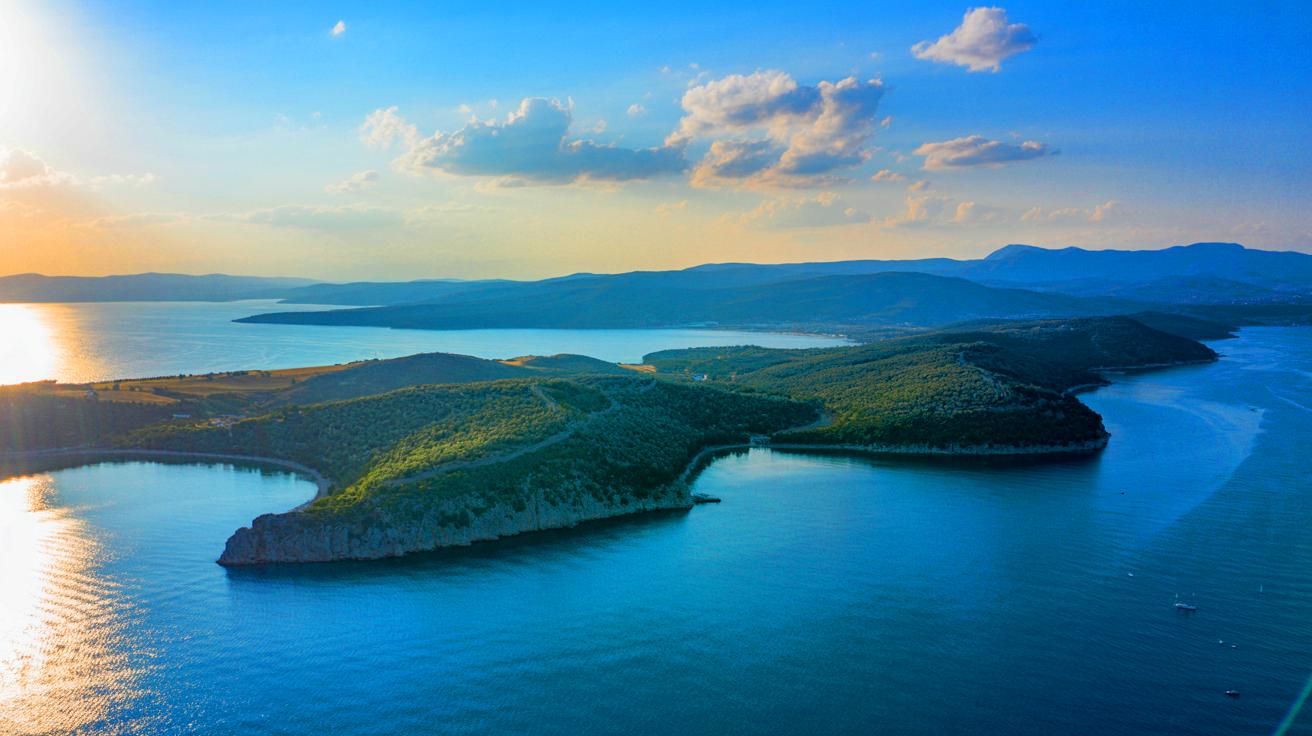
In the picturesque region of Ayvalık, Turkey, where the Aegean Sea meets the olive-covered hills, recent archaeological discoveries have begun to rewrite the narrative of early human migration into Europe. This serene district, known for its beautiful islands and seafront cafés, might have served as a crucial passageway for early humans departing Africa for Europe tens of thousands of years ago. A new study led by Turkish archaeologists has revealed that Ayvalık was once connected to a vast coastal plain. This natural bridge, present during the Ice Age when sea levels were significantly lower, offered a vital route for early human migration. The revelation sheds new light on the pathways our ancestors took during their earliest migrations.
Rediscovering a Lost World
An interdisciplinary team of archaeologists, geologists, and paleoanthropologists from various Turkish universities has uncovered remarkable evidence of a long-buried landscape at Ayvalık. Using advanced technologies such as drones, satellite imaging, and ground surveys, the researchers have reconstructed a landscape that existed during the Pleistocene era. During this time, sea levels were over 330 feet lower than today, exposing a wide, fertile belt between Ayvalık and neighboring islands like Lesbos and Alibey.
This landscape would have been a haven for migrating hunter-gatherers, offering abundant resources such as freshwater, flint deposits, and elevated ground for tool production and temporary camps. The area was rich with rivers, lagoons, and dense vegetation, providing essential resources and refuge for early humans. As the researchers noted, the local landscape supplied both resources and refuge, facilitating early human survival and adaptation.
Stone Tools Speak Across Time
The most compelling evidence of early human activity in Ayvalık comes from the discovery of 138 stone tools across 10 sites in a 77-square-mile area. These tools, including handaxes, cleavers, and meticulously crafted flake tools, exhibit signatures of Acheulean and Mousterian technologies. These discoveries link the tools to Homo erectus and early Neanderthals, providing concrete evidence of early human presence in the region.
Dr. Göknur Karahan from Hacettepe University, one of the lead researchers, described the moment her team discovered these tools as unforgettable. Walking through landscapes where no Paleolithic remains had ever been recorded, they suddenly found themselves holding evidence of ancient life. This discovery adds an entirely new page to the story of human dispersal, highlighting Ayvalık’s significance as a potential land bridge for human migration during the Pleistocene era.
Reconstructing a Vanished Landscape
The reconstruction of Ayvalık’s ancient landscape involved piecing together clues buried both onshore and on the seafloor. Sediment coring and seafloor surveys revealed ancient riverbeds and valleys submerged beneath the modern Aegean waters. During the last Ice Age, these valleys formed part of a vast lowland plain that connected Anatolia to Europe. As the world warmed and ice melted, rising sea levels submerged this corridor, leaving behind traces of its former inhabitants.
According to Ankara University associate professor Kadriye Özçcelik, these reconstructions highlight the region’s importance in understanding hominin dispersals in the northeastern Aegean. The findings suggest that this area provided a relatively direct route from Africa to southern Europe, challenging more widely accepted theories of migration through the Levantine and Balkan routes.
Evidence of Innovation and Survival
The tools discovered in Ayvalık demonstrate a high level of craftsmanship, particularly the Levallois-type flake tools, which are indicative of Neanderthal and early modern human sophistication. These tools were used for butchering animals, shaping hides, and crafting wooden spears, showcasing the innovative capabilities of early humans in the region.
Dr. Karahan noted that the existence of these objects in Ayvalık is particularly noteworthy, as they reflect technological traditions shared across Africa, Asia, and Europe. While human remains were not found, the types and frequency of tools indicate repeated use of the area over hundreds of thousands of years. Artifact clusters near old river terraces and elevated points suggest seasonal occupation, possibly linked to animal migrations or the availability of flint-rich outcrops.
Following Humanity’s Expanding Footsteps
For years, scientists have debated the pathways humans took as they dispersed from Africa into Europe, considering routes through the Levant, the Caucasus, and Anatolia. The discoveries at Ayvalık lend credence to the Anatolian route, demonstrating that this region was not a barrier but an overpass for early human migration.
Similarities between the tools found in Ayvalık and those from other Mediterranean sites, such as Israel’s Tabun Cave and Jordan’s Ubeidiya site, suggest long-distance cultural exchanges. These parallels point to interconnected traditions and mobility networks spanning thousands of miles. Dr. Hande Bulut from Düzce University highlighted Ayvalık’s potential as a long-term residence, emphasizing its role in understanding technological advancement and communication across the Aegean.
The discoveries at Ayvalık have not only expanded our understanding of human migration but also highlighted the importance of preserving this rich prehistoric heritage. As urbanization and tourism threaten many open-air sites, efforts are underway to collaborate with local authorities on heritage trails and museum displays to protect the region’s archaeological significance. With plans for underwater archaeology to explore the Aegean seabed further, Ayvalık’s story continues to unfold, offering new insights into human resilience and curiosity. As we delve deeper into the past, what new revelations about our ancestors’ journeys await discovery?