




| IN A NUTSHELL |
|
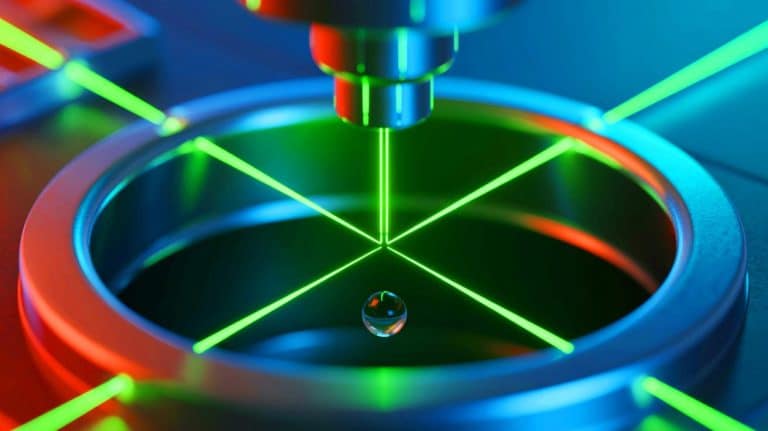
The National Institute of Standards and Technology (NIST) has unveiled a breakthrough in timekeeping technology with their latest aluminum ion clock. This innovative clock is set to redefine precision in measuring time, boasting a remarkable accuracy that surpasses previous records. By utilizing the subtle vibrations of a trapped aluminum ion, cooled to near absolute zero, the clock achieves precision down to an astounding 19 decimal places. This development is a milestone in the field of physics and promises to enhance our understanding of the universe.
A New Benchmark in Clock Accuracy
The NIST team has developed a clock that is 41 percent more accurate than the previous record holder in its category. This advancement is not just a leap in timekeeping but a significant scientific achievement. The clock uses systematic uncertainty to measure time with unprecedented precision, making it 2.6 times more stable than its predecessors. This stability is crucial for applications that demand exact timing, such as testing the limits of Einstein’s theory of relativity and exploring the mysteries of dark matter. The clock’s accuracy is underpinned by 20 years of meticulous research and development, highlighting the dedication and expertise of the scientists involved.
The Role of Quantum Physics
At the heart of the NIST clock’s design is a deep understanding of quantum physics. The clock’s accuracy depends on controlling the micromotions of its components, a task that requires a profound grasp of atomic behavior. The clock’s enclosure is made from a thickened diamond wafer, with gold-coated electrodes inside, which helps stabilize the electric fields necessary for its operation. This intricate design ensures that the clock’s ticking is not thrown off by even the smallest disturbances. The clock’s success is a testament to the power of quantum mechanics in advancing technology.
The Aluminum-Magnesium Ion Pair
A key factor in the clock’s precision is the pairing of an aluminum ion with a charged magnesium ion. This combination allows the aluminum ion to be more easily controlled with laser light, enhancing both the accuracy and stability of the clock. The laser, sourced from a lab located just over 2 miles away, is renowned for its precision and stability, which further contributes to the clock’s performance. This innovative approach reduced the time needed to gather sufficient data to measure a second from three weeks to a mere day and a half, showcasing the efficiency of the new design.
Applications and Future Prospects
Atomic clocks like the one developed by NIST do not function like ordinary watches. Instead, they serve as reference points for calibrating other clocks and conducting experiments. By providing an incredibly precise measurement of a second, these clocks support a range of scientific endeavors. The potential applications are vast, from enhancing GPS technology to enabling more precise measurements in physics. The NIST team is optimistic about the future, with plans to explore new clock architectures and potentially scale up the number of clock ions. This ongoing research could lead to even greater levels of accuracy and open new avenues for scientific exploration.
As the NIST team continues to push the boundaries of timekeeping, their work raises an intriguing question: How might these advancements in clock technology transform our understanding of time and the universe in the years to come?