



| IN A NUTSHELL |
|
In recent years, the dream of interplanetary travel has transitioned from the realm of science fiction to a tangible goal. However, one significant challenge remains: the logistics of sustaining life in space. The cost of providing food, water, and other essentials for astronauts is astronomical, with daily expenses reaching tens of thousands of dollars. As missions to Mars and beyond are planned, scientists and engineers are exploring innovative solutions to make these journeys feasible, one of which involves the use of yeast. This microscopic organism could revolutionize how supplies are managed in space, potentially enabling longer missions with fewer resources.
Yeast: A Microscopic Powerhouse
Yeast has been a staple in human innovation for centuries, aiding in everything from baking bread to brewing beer. But its potential extends far beyond culinary applications. The latest scientific endeavors focus on harnessing yeast’s capabilities for space travel. By genetically engineering these microorganisms, researchers aim to create tiny factories that can produce essential items like food, medicine, and biofuels. This concept, known as precision fermentation, could drastically reduce the weight and cost of supplies needed for space missions.
The versatility of yeast is astounding. By converting simple sugars, it can produce a wide array of products, including vitamins and amino acids necessary for human nutrition. In space, this could mean the difference between carrying tons of supplies and a compact system capable of generating what’s needed on demand. This approach not only conserves space and weight but also offers a more resilient supply chain, crucial for missions far from Earth.
The Orbital Laboratory Experiment
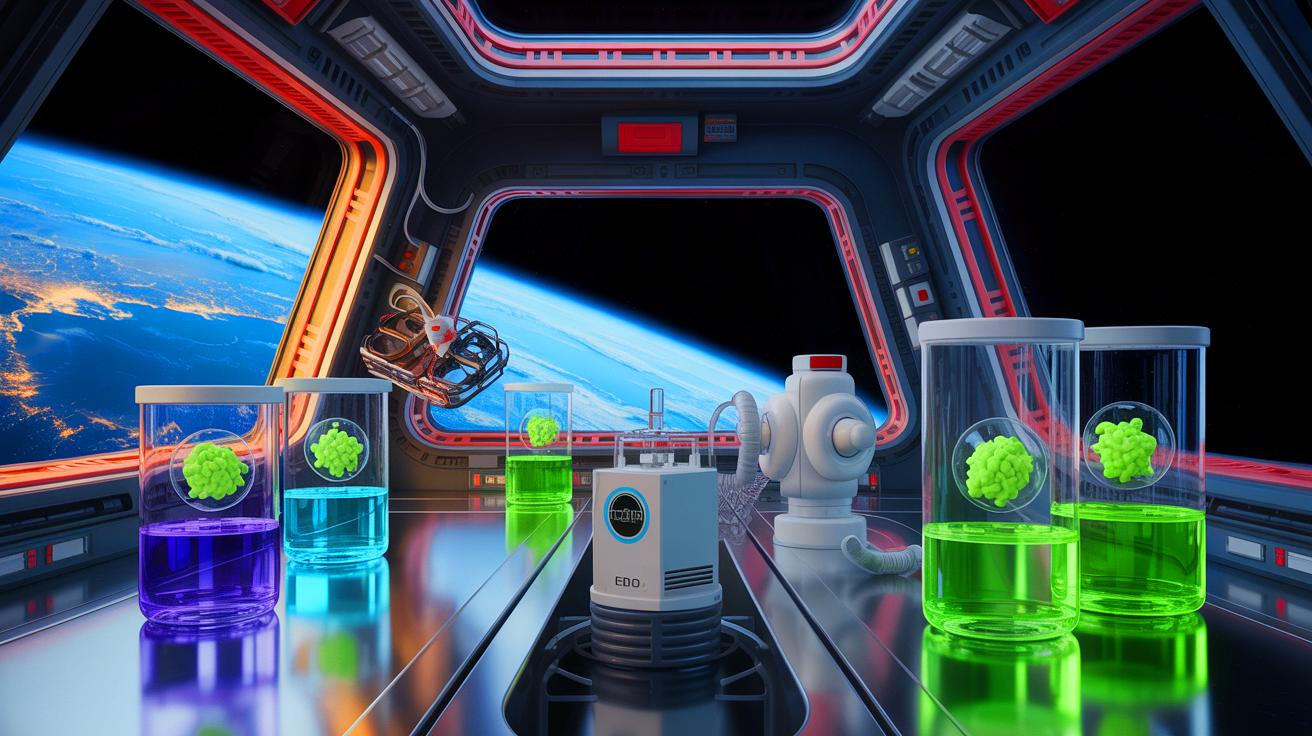
To test the viability of yeast-based production systems in space, a collaborative effort led by Dr. Rodrigo Ledesma-Amaro has launched a miniature laboratory into orbit. This “lab-in-a-box” is designed to assess how yeast and other microbes behave in microgravity. The project, supported by institutions like Imperial College London and companies such as Frontier Space, represents a significant step in space biotechnology.
The spacecraft carrying this experimental lab was launched aboard Phoenix, Europe’s first commercial returnable spacecraft, with assistance from SpaceX. The mission aims to gather data on microbial growth, productivity, and survival in space. These insights are invaluable for developing bio-manufacturing systems that could support future space habitats or even interstellar journeys. As Dr. Ledesma-Amaro notes, the goal is to make space travel more sustainable by utilizing academic and industry expertise in biotechnology and space science.
Potential Impacts on Earth
While the primary focus of this research is space travel, the implications for Earth are equally significant. As climate change and resource scarcity become pressing issues, the ability to produce food and materials sustainably is crucial. The techniques developed for space could be adapted for use in remote or resource-poor areas on Earth, offering a new model for self-sufficient production.
Dr. Ledesma-Amaro’s team is already exploring terrestrial applications of their space-based research. By understanding microbial performance in extreme environments, they aim to design systems capable of functioning in disaster zones, deserts, or other challenging settings. This research could lead to compact, environmentally friendly production units capable of feeding populations with minimal impact on the planet.
Future Space Missions and the Role of Yeast
The impending retirement of the International Space Station marks a pivotal moment for space exploration. As new generations of space stations and interplanetary craft are developed, the integration of biotechnology will be essential. The current mission with Phoenix previews how astronauts might use bio-manufacturing systems as standard equipment, much like solar panels are used today.
As agencies and private companies set their sights on Mars and beyond, the role of yeast and other microbes becomes increasingly critical. These organisms could provide the backbone for survival in the most hostile environments, ensuring that astronauts have the resources they need to thrive. The research conducted in the small orbiting lab today may well determine humanity’s ability to establish a permanent presence beyond Earth.
The exploration of yeast’s potential in space represents a paradigm shift in how we approach long-term space missions. By transforming these microorganisms into versatile production units, we can envision a future where space travel is not only feasible but sustainable. The ongoing experiments above us are not just about reaching new worlds; they are about redefining how we sustain life both in space and on Earth. As scientists eagerly await the results of these groundbreaking studies, the question remains: How will these innovations shape the next era of human exploration and survival?