




| IN A NUTSHELL |
|
Potatoes are a staple in many diets, loved for their versatility in dishes like fries, mashed potatoes, and more. Yet, their origins have long remained a mystery, intriguing scientists for decades. Recent research has unveiled a fascinating evolutionary tale involving a surprising relative: the tomato. This discovery reshapes our understanding of agricultural history and highlights how hybridization events can lead to remarkable evolutionary outcomes.
The Mystery of Potato Origins
For years, scientists puzzled over the origins of the humble potato. While modern potatoes resemble the Etuberosum species from Chile, they differ significantly in one key aspect: tuber production. Etuberosum plants lack the ability to produce these nutrient-rich, edible parts that define the potato. This difference raised questions about how potatoes developed their unique traits.
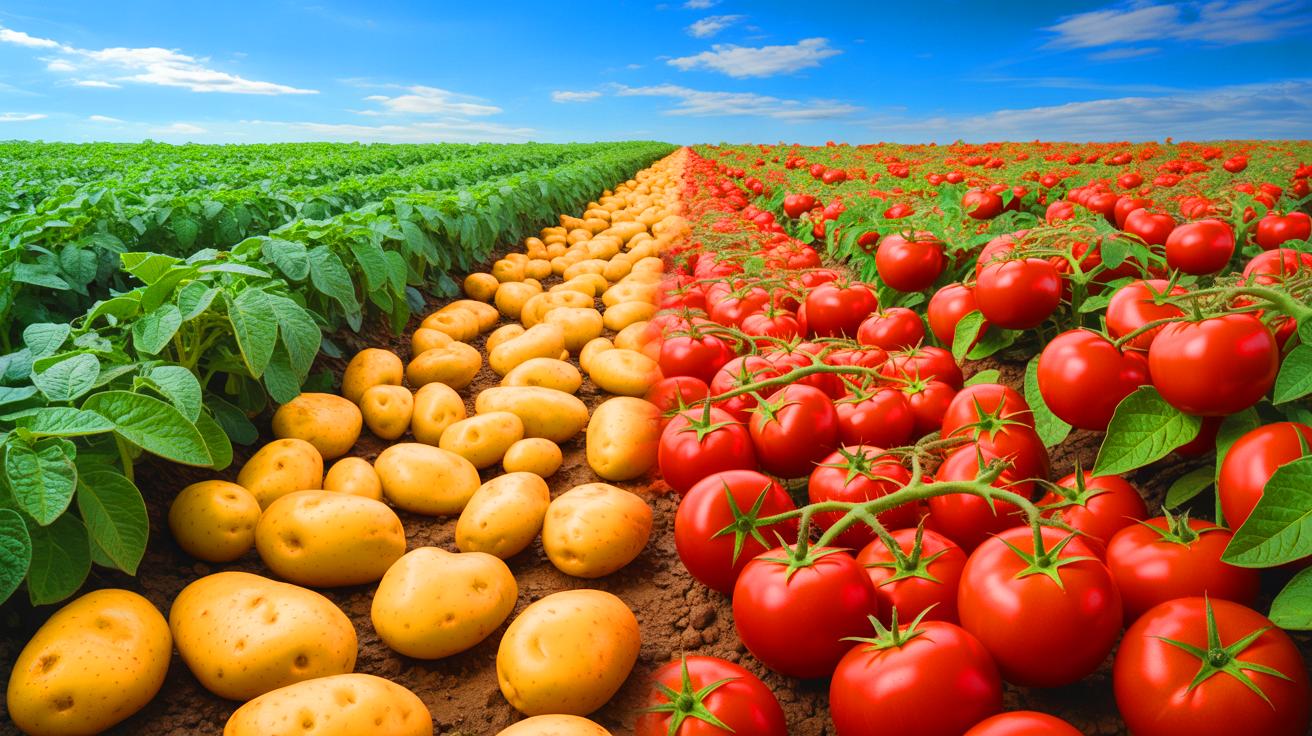
In a groundbreaking study, researchers analyzed the DNA of hundreds of potato plants, encompassing 450 cultivated varieties and 56 wild species. This extensive genetic analysis revealed that potatoes are the result of an ancient hybridization event between tomato plants and Etuberosum. The discovery marked a major breakthrough in understanding potato evolution, proving that this hybridization was the key to the potato’s development.
“We’ve finally solved the mystery of where potatoes came from,” said Sanwen Huang from the Chinese Academy of Agricultural Sciences, highlighting the significance of this discovery.
The Genetic Puzzle: Two Key Genes
How did the hybridization between tomatoes and Etuberosum lead to the formation of potato tubers? Scientists identified two crucial genes that were essential. The first gene, SP6A, functions as a master control switch, signaling the plant to form tubers. Interestingly, this gene originated from tomatoes.
The second gene, IT1, directs the growth and swelling of underground stems into tubers. This gene came from Etuberosum. The presence of both genes was necessary for tuber development, illustrating how the fusion of genetic material from two species can create new traits. This genetic combination allowed potatoes to emerge as a new plant species with a unique survival advantage.
“Our findings show how a hybridization event between species can spark the evolution of new traits, allowing even more species to emerge,” Huang explained.
The Role of Geological Change
The timing of this hybridization was fortuitous. It coincided with the rapid uplift of the Andes Mountains, creating new environments and ecological niches. The development of tubers provided potatoes with a significant survival advantage in these harsh conditions. Tubers allowed potatoes to store nutrients underground, safeguarding them from extreme weather.
This adaptation also enabled potatoes to reproduce without relying on seeds or pollination. New plants could sprout from tuber buds, facilitating rapid spread across diverse habitats. This capability contributed to the rich diversity of potato species observed today, making the potato an evolutionary success story.
“Tuber formation gave potatoes a huge advantage in harsh environments,” said Huang. “It fueled an explosion of new species and contributed to the rich diversity of potatoes we see and rely on today.”
Potatoes’ Global Impact
The discovery of the potato’s origins is not just an academic curiosity. Potatoes are the third most important staple crop globally, after wheat and rice. Understanding how potatoes evolved can help scientists improve crop resilience, disease resistance, and yields. Insights gained from this research can lead to innovations in agriculture, ensuring food security for a growing global population.
This study also underscores the power of hybridization in evolution. By combining genes from different species, nature can create entirely new organisms with unique traits. This process has shaped ecosystems and agriculture, influencing the foods we eat today.
“We’ve revealed how one event millions of years ago still affects what we eat today. It shows the hidden power and importance of evolutionary history,” Huang stated, emphasizing the broader implications of their findings.
The Linguistic Link
The connection between tomatoes and potatoes extends beyond genetics to language. The English word “tomato” is derived from the Nahuatl language, evolving into “tomate” in Spanish and later “tomato” in English, mirroring the pattern set by “potato.” This linguistic link hints at their shared evolutionary past, further enriching their intertwined history.
As you enjoy your next serving of potatoes, consider their extraordinary journey from a chance hybridization event to becoming a global staple. This story illustrates the intricate tapestry of evolution, where even a small genetic mix-up can lead to significant changes in ecosystems and human agriculture. How might understanding these complex relationships shape the future of food and agriculture?