




| IN A NUTSHELL |
|
The universe is a tapestry of mysteries, with our solar system nestled within an intriguing structure known as the Local Hot Bubble (LHB). This vast, million-degree hot bubble, filled with sparse gas, envelops our cosmic neighborhood. Long a subject of curiosity, its exact shape and origin have eluded astronomers for decades. Recent advancements, however, are shedding light on this celestial enigma, thanks to the efforts of scientists and sophisticated space telescopes. What emerges is a dynamic portrait of our galactic environment, with implications for understanding the complex interplay of cosmic forces. As new data comes to light, our comprehension of the LHB continues to evolve.
A Clearer View of a Cosmic Mystery
The quest to demystify the Local Hot Bubble has taken a significant leap forward, thanks to the Max Planck Institute for Extraterrestrial Physics. Utilizing the eROSITA X-ray telescope, positioned approximately 930,000 miles from Earth, researchers have mapped the LHB with unprecedented detail. This telescope’s strategic location outside Earth’s atmosphere was crucial, providing a clear view devoid of solar wind interference. The observations were conducted during a solar minimum, offering a rare, undisturbed glimpse into the X-ray emissions surrounding our solar system.
Lead researcher Michael Yeung emphasized the uniqueness of the data collected during this period. The team divided the sky into 2,000 segments, analyzing the X-ray glow in each. The findings have dramatically altered previous conceptions of the LHB’s structure, revealing a complex and dynamic entity. The meticulous mapping efforts have not only illuminated the shape of the bubble but also offered insights into its formation and evolution. These revelations mark a significant milestone in our understanding of the local cosmic environment, paving the way for future discoveries.
A Lumpy, Stretching Bubble
Contrary to earlier assumptions of the LHB as a smooth sphere, the recent study reveals it as an irregular, bulging structure. It expands more readily towards the galactic poles, avoiding the denser regions of the Milky Way’s mid-plane. This observation aligns with expectations that hot gas would move towards areas with less resistance. However, the bubble’s uneven, jagged edges add a layer of complexity to its characterization.
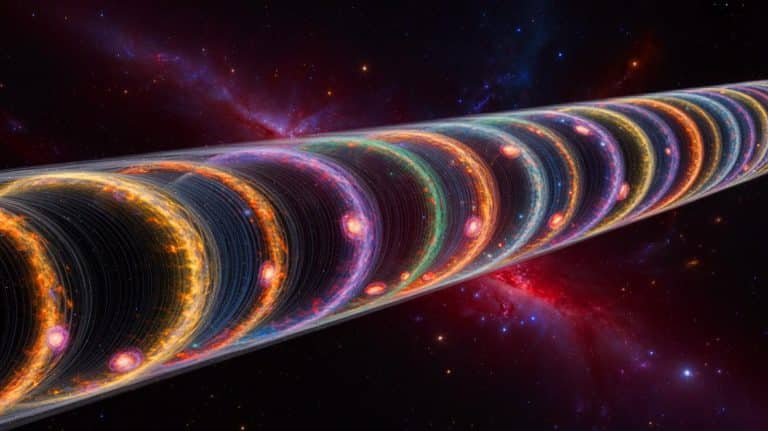
Michael Freyberg, a co-author of the study, likened the LHB’s structure to a bipolar nebula but noted its rougher, more intricate outlines. This irregularity likely stems from chaotic forces such as overlapping supernova explosions and stellar feedback. Among the most surprising discoveries was a previously unknown interstellar tunnel stretching towards the constellation Centaurus. This feature, identified through eROSITA’s enhanced sensitivity, suggests possible connections with neighboring superbubbles, hinting at a more interconnected galactic structure.
More Than Just a Bubble
The concept of the LHB dates back over five decades, initially proposed to explain faint X-ray readings. These readings seemed improbable through dense interstellar dust, suggesting a cavity of hot, thin gas enveloping our solar system. Early theories faced skepticism in 1996 when solar wind interactions were found to produce similar X-rays. This led to questions about the LHB’s true nature.
eROSITA’s observations, conducted from a vantage point free from Earth’s atmospheric interference, have largely resolved this debate. The data confirms that much of the soft X-ray background originates from the LHB, validating its existence. The study also uncovered a temperature disparity within the bubble, with the southern region warmer than the northern side. This temperature variation could indicate recent heating events, potentially from new supernova explosions, underscoring the LHB’s dynamic, evolving nature.
A Tunnel Network Through the Stars?
The discovery of the Centaurus tunnel suggests that the LHB is part of a larger network of interstellar passages. These tunnels, akin to arteries, may link the LHB to other cosmic features such as the Gum Nebula and the Canis Majoris tunnel. The latter, identified earlier, connects two massive voids, hinting at a complex, interconnected galactic structure.
Supporting this hypothesis, the research team mapped dense molecular clouds at the bubble’s periphery, observing their outward movement. This motion suggests they were propelled by the explosive forces that carved out the LHB. Gabriele Ponti, a co-author, noted that the Sun entered the LHB relatively recently in cosmic terms, highlighting the transient nature of our solar system’s position within this structure.
What Comes Next?
The comprehensive 3D model developed by the research team offers a vivid depiction of the LHB and its surroundings. It incorporates supernova remnants, molecular clouds, dust, and known tunnels, presenting a layered view of our galactic neighborhood. This model not only enhances our understanding of the LHB but also provides a framework for exploring the broader dynamics of our galaxy.
As astronomers delve deeper into this data, further surprises may emerge. If the galaxy indeed harbors a network of hot, X-ray-glowing bubbles connected by tunnels, unraveling this web could yield new insights into stellar life cycles, galactic evolution, and the movement of cosmic material. The ongoing exploration of the LHB and its connections challenges us to rethink our place in the universe. How will these findings reshape our understanding of the cosmos and inspire future astronomical endeavors?