

Space Travel Reveals ‘Astronauts Age Faster’: Scientists Warn of Accelerated Stem Cell Aging Threatening Health in Orbit
 By
Dana Whitcombe
By
Dana Whitcombe
| IN A NUTSHELL |
|
The intersection of space exploration and human biology has long fascinated scientists, especially as astronauts face unique physiological challenges beyond Earth’s atmosphere. Recent research has revealed a concerning development: stem cells, the body’s fundamental building blocks for blood and immune systems, are aging faster in space. This discovery, rooted in studies conducted aboard the International Space Station (ISS), suggests that the very cells responsible for regeneration might falter in the microgravity and radiation of space. Such findings not only have implications for the health of astronauts on long missions but also provide critical insights into age-related diseases on Earth.
Understanding the Experimentation Process
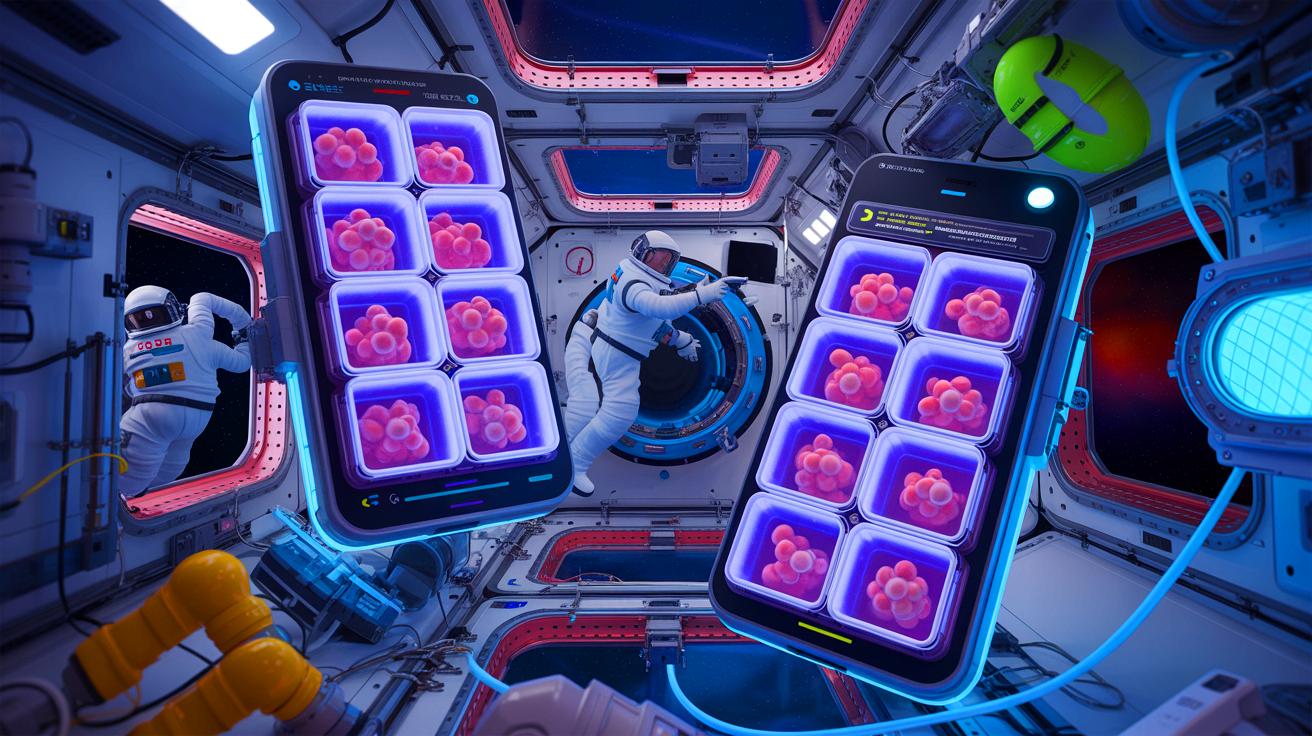
The groundbreaking study was part of the NASA-supported Integrated Space Stem Cell Orbital Research team, which aimed to mimic the human body’s bone marrow environment in space. Researchers used advanced nanobioreactors, small devices designed to simulate the conditions of bone marrow, for their experiments. These reactors, roughly the size of a smartphone, were seeded with human stem cells sourced from hip replacement surgery patients. This innovative approach allowed scientists to observe stem cell behavior in microgravity.
An advanced fluorescent reporter system, FUCCI2BL, was used to monitor the cells in real-time. This system illuminated the cells based on their cycle stages, providing critical insights into their activity. The nanobioreactors were housed in CubeLabs, autonomous systems capable of conducting experiments in orbit with minimal human intervention. Between late 2021 and early 2023, these units were sent to space on four SpaceX resupply missions, allowing some stem cells to spend up to 45 days in microgravity. Scientists then compared these space-exposed cells with their Earth-bound counterparts using various advanced techniques, including sequencing and gene expression profiling.
A Surprising Discovery: Tired Stem Cells
One of the most startling revelations from the study was the change in stem cell behavior due to space conditions. Under normal circumstances, healthy stem cells remain dormant for about 80% of their lifecycle, a state crucial for preserving their ability to regenerate new blood and immune cells. However, in the microgravity of space, this pattern was disrupted. The stem cells became unusually active, depleting their energy reserves much faster than expected, leading to functional exhaustion by the time they returned to Earth.
Catriona Jamieson, the lead researcher, highlighted this issue, noting that the inability of stem cells to return to their dormant state could hinder their function in maintaining a robust immune system. Tests showed that space-traveled hematopoietic stem and progenitor cells (HSPCs) had a reduced capacity for self-renewal compared to those on Earth. While some improvement was observed when these cells were cultured on younger supportive stromal layers, the recovery was limited when they were placed back on their original aged stroma. This suggests that the microenvironment surrounding stem cells significantly affects their recovery and functionality.
Molecular Stress and the “Dark Genome”
Beyond the visible decline in stem cell function, the study also uncovered signs of molecular stress in the space-exposed samples. Telomeres, the protective caps at the ends of chromosomes, were found to have shortened, indicating accelerated cellular aging. Additionally, the mitochondria, crucial for cellular energy production, showed reduced gene activity and copy number. A pivotal self-renewal gene, ADAR1 p150, was downregulated, while inflammatory signaling molecules surged.
A particularly concerning observation was the activation of repetitive DNA elements, often referred to as the “dark genome.” These sequences, which make up over half of human DNA, typically remain inactive. However, under the stress of space conditions, they can become active, resembling ancient viral remnants within the genome. Jamieson likened this phenomenon to a “death spiral,” similar to changes observed in preleukemic cells, which carry a risk of cancerous transformation. Whole-genome sequencing further confirmed an increase in mutations within blood-forming cells, highlighting the potential for long-term immune dysfunction and accelerated aging.
Inflammation Adds to the Burden
The study also highlighted the role of inflammation in exacerbating stem cell aging. Cytokine analysis revealed elevated levels of pro-inflammatory signals in the cells exposed to space, compared to ground samples. Chronic inflammation is known to drive stem cell aging, suggesting that the space environment pushes these cells towards exhaustion.
The study found that the effects of space travel varied depending on the surrounding stromal environment. HSPCs grown on young stromal cells showed some resilience, downregulating inflammatory genes and activating protective ones. However, when these cells were cultured on their own aged stroma, they lost their protective gene activity, further compromising their immune defense capabilities. This research builds on NASA’s earlier Twins Study, which documented telomere changes and immune shifts in astronaut Scott Kelly during his year in orbit compared to his twin brother Mark on Earth. The findings underscore that blood stem cells are at the core of many physiological changes observed in space.
The Recovery Window
Despite the daunting challenges posed by space, there is hope for recovery. Preliminary findings from another study suggest that stem cells can rebound once astronauts return to Earth, although the process may take up to a year. This indicates that the damage incurred is not necessarily permanent, and with appropriate interventions, the risks could be mitigated. Jamieson and her team are exploring potential countermeasures, including medications that might inhibit harmful genomic activity. They see bioreactors as predictive tools for assessing stem cell health, potentially identifying astronauts who are better suited for space travel and guiding the development of treatments prior to missions.
Researchers not directly involved in the study have praised its clarity and implications. Arun Sharma from Cedars-Sinai Medical Center emphasized the study’s strong evidence, which could aid in designing therapies to slow or reverse aging. Luis Villa-Diaz of Oakland University echoed this sentiment, highlighting the study’s role in directing scientists toward protective strategies. The work also raises questions about the complexities of space biology, as Elena Kozlova from Uppsala University noted differing results in other stem cell types. As space agencies plan for deeper space exploration, how will we address the challenges of maintaining astronaut health?