



“Desperate Hope Surges in Darkness”: Revolutionary Eye Surgery Sparks Global Race to Restore Sight
 By
Dana Whitcombe
By
Dana Whitcombe
| IN A NUTSHELL |
|
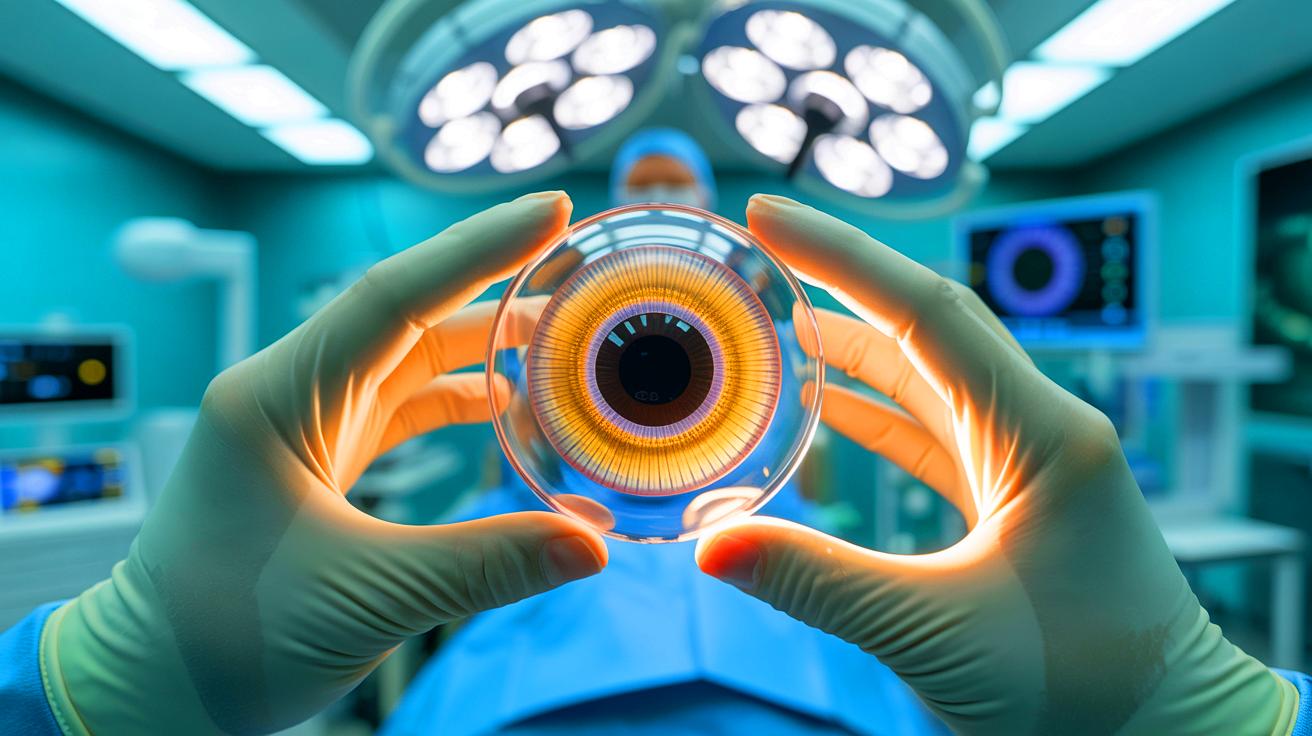
The promise of restoring sight to those who have lost it due to corneal disease is becoming a reality thanks to a groundbreaking implant. Developed from purified collagen protein derived from pig skin, this new implant has successfully restored vision in individuals who were previously blind. The research, led by Linköping University in Sweden and its commercial partner, LinkoCare Life Sciences AB, marks a significant advancement in the field of ophthalmology and has the potential to revolutionize eye care on a global scale.
A Global Shortage of Donor Corneas
Corneal blindness is a pressing issue affecting approximately 12.7 million people around the world. The cornea, the eye’s clear outer layer, plays a crucial role in focusing light, and its impairment can lead to severe vision loss. Currently, the primary treatment for advanced corneal damage is a transplant using tissue from a deceased human donor. However, there is a significant shortage of donor corneas, with only one in 70 patients receiving the required transplant. This scarcity is particularly acute in low- and middle-income countries where the need is greatest.
The new implant, mirroring the human cornea, is crafted from pig skin collagen. This alternative not only addresses the donor shortage but also offers a solution that can be mass-produced and stored for up to two years. This breakthrough allows for increased accessibility to vision-restoring treatments, especially in regions lacking advanced medical infrastructure. Neil Lagali, a professor at Linköping University, emphasized the importance of this development, noting its potential to reach a broader audience of patients in need.
Building a Bioengineered Cornea
The creation of the bioengineered cornea, known as BPCDX, involves utilizing highly purified collagen sourced from pig skin, a byproduct of the food industry. Pig tissue has been safely used in medical applications for years, making it a logical and cost-effective choice for this innovative solution.
The collagen is stabilized through a crosslinking process, resulting in a robust and transparent material resembling a natural human cornea. Unlike traditional donor corneas, which have a two-week viability window, these bioengineered corneas can be stored for up to two years, enhancing their availability. This increased shelf-life could significantly impact regions without sophisticated eye banks, offering new hope to many who are currently underserved. Mehrdad Rafat, a pivotal figure in the development of the implant, stressed the aim of making this technology accessible to all, regardless of economic status.
A Gentler Way to Perform Surgery
In tandem with the implant, researchers introduced a less invasive surgical technique that simplifies the traditional corneal transplant process. Typically, a diseased cornea is completely removed and replaced with donor tissue, necessitating complex surgery and specialized facilities. The new method involves creating a small pocket within the patient’s existing cornea and inserting the implant, eliminating the need for stitches.
This approach is not only less invasive but can also be performed with standard instruments or laser technology, broadening its applicability. Professor Lagali highlighted the potential of this method to be utilized more widely, thus increasing the number of patients who could benefit from the surgery. By preserving the patient’s own tissue, this technique reduces recovery time and potential complications. The simplicity of the procedure makes it feasible for a greater number of hospitals, particularly in areas with limited medical resources.
From the Lab to Human Eyes
Before reaching human trials, the bioengineered implant underwent rigorous safety evaluations. Initial tests in laboratories confirmed its non-toxic and stable nature. Animal studies, including those with rats and mini-pigs, further validated its safety and durability. These promising results paved the way for the first human trials, conducted with 20 patients in India and Iran suffering from advanced keratoconus, a condition leading to thinning and distortion of the cornea.
The outcomes of these trials were remarkable. Vision was restored in patients who were previously blind or on the brink of losing their sight entirely. Two years post-surgery, none of the participants remained blind, with some achieving perfect 20/20 vision.
“The surgeries were complication-free, with tissues healing rapidly and minimal post-operative care required,”
said a report on the trials. This represents a significant improvement over traditional transplants, which often require prolonged immunosuppressive treatment to prevent rejection.
Why This Breakthrough Matters
This innovative technology holds immense potential for transforming the lives of millions living with corneal blindness. By eliminating the dependence on donor corneas, the risks associated with transplantation are reduced, and access to sight-restoring surgery is expanded, especially in regions lacking specialized facilities.
The pilot study demonstrated that the bioengineered cornea is as effective as donor tissue with additional benefits such as simpler handling and quicker recovery. As researchers prepare for larger clinical trials in Europe and beyond, the path toward regulatory approval is steadily advancing. This breakthrough is not just a medical achievement but a beacon of hope for those who have lived in darkness for too long.
The success of bioengineered corneal implants could redefine accessibility to vision-restoring surgery, particularly in developing nations where corneal blindness remains largely untreated. By offering an affordable and long-lasting solution, even remote hospitals could stock these implants and perform surgeries independent of donor availability. Looking ahead, scientists are exploring adaptations of this technology for other eye diseases and personalized treatments to further enhance efficacy. How might these advancements shape the future of global eye care and improve the quality of life for those affected by preventable blindness?