



| IN A NUTSHELL |
|
Recent research has uncovered a groundbreaking discovery about the role of sunlight in the natural process of evaporation. For years, scientists have observed that water evaporates more efficiently under sunlight compared to other heating methods. However, the underlying reason for this remained elusive. A new study conducted by researchers from North Carolina State University and Huazhong University of Science and Technology reveals that the oscillating electric field inherent in sunlight is a major factor in this process. This finding not only deepens our understanding of evaporation but also holds potential implications for enhancing solar-powered water purification systems and energy efficiency technologies.
The Hidden Power of Sunlight’s Electric Field
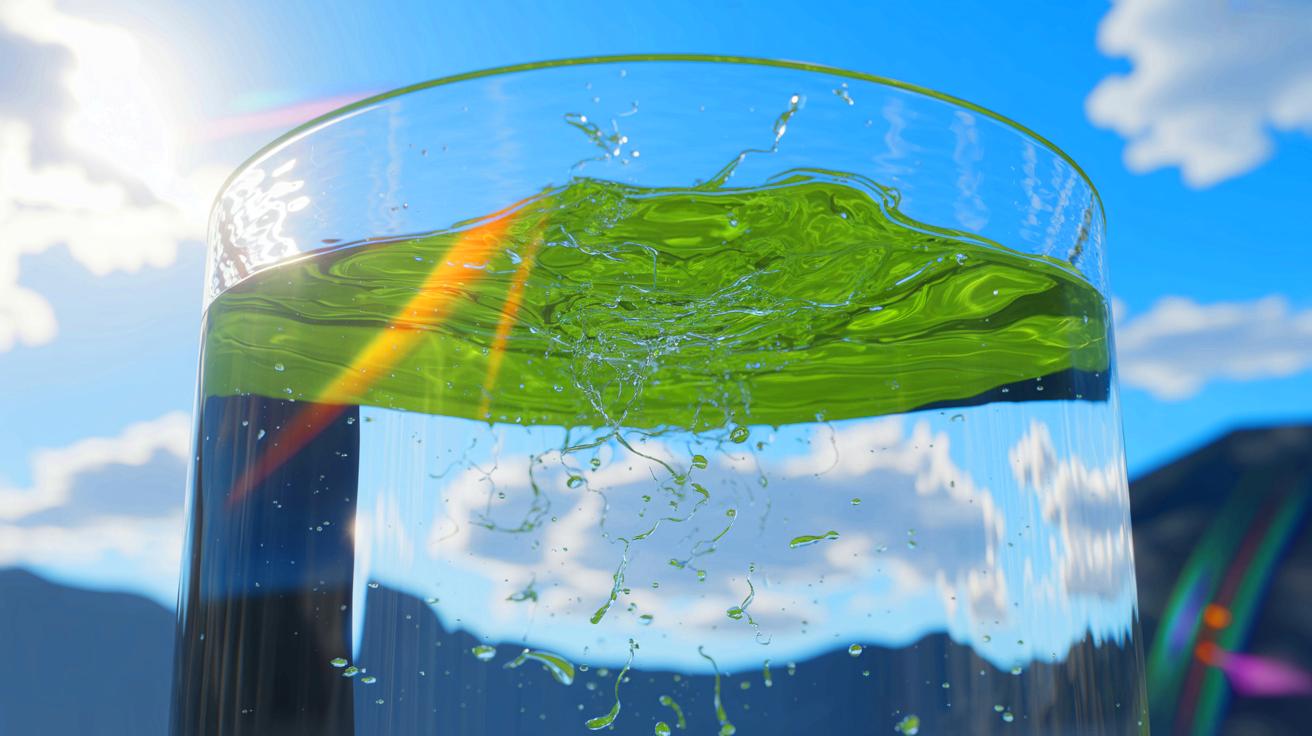
Sunlight, a form of electromagnetic radiation, carries more than just warmth. It also comes with an ever-changing electric field that oscillates back and forth. This characteristic, often overlooked, gives sunlight a significant advantage over other heat sources when it comes to evaporating water. According to Saqlain Raza, the lead author of the study and a Ph.D. student at NC State, the sun’s ability to cause water to evaporate efficiently has been well-known, but the exact mechanism was unclear until now.
Through advanced simulations and molecular physics, researchers demonstrated that sunlight’s oscillating electric field can accelerate water evaporation by up to 40% compared to heat alone. Jun Liu, co-corresponding author and associate professor at NC State, explained that when this electric field is removed from the equation, the evaporation process slows significantly. The presence of the field, however, facilitates a rapid evaporation rate, underscoring the hidden power of electromagnetic waves.
New Microneedle Patch Tracks Diabetes in Real-Time, But Could It Shatter Privacy as We Know It?
Unraveling the Mystery of Water Clusters
The research further delves into how the electric field interacts with water molecules at a molecular level. Evaporation occurs when water molecules break free from the liquid and enter the air, either individually or in clusters. It turns out that the electric field is particularly effective at separating these clusters of molecules. As Raza explains, water clusters are finite groups of molecules that remain interconnected but can detach from the liquid bulk with less energy than is required to separate individual molecules.
Liu adds that this efficiency is due to the electric field’s ability to grab and pull apart these clusters, which accelerates the evaporation process. Understanding the formation and behavior of these clusters is crucial, as it determines the speed at which evaporation occurs. This knowledge could lead to innovations in water purification and energy systems that harness the natural efficiency of sunlight.
Hydrogels and the Simulation of Evaporation
To test their findings, researchers compared evaporation in two different scenarios: plain water and water confined within a hydrogel. Hydrogels, soft materials composed of long polymer chains, alter the behavior of water molecules. In this study, polyvinyl alcohol hydrogels were used to explore the interactions between water, hydrogels, and the electric field.
Water within the hydrogel exhibited different evaporation dynamics, as more clusters formed near the surface due to interactions with the material. This made it easier for the electric field to cleave these clusters, resulting in faster evaporation. This observation challenges previous theories that focused solely on the structural or energy state changes of water within hydrogels, emphasizing the pivotal role of the electric field in the evaporation process.
| Scenario | Evaporation Rate |
|---|---|
| Plain Water | Slower Evaporation |
| Water in Hydrogel | Faster Evaporation |
Implications for Future Technologies
This study’s findings could have significant real-world applications, particularly in the field of solar-powered water purification. With clean water in high demand globally, understanding the role of electric fields in evaporation could lead to the development of more efficient and energy-saving systems. Jun Liu emphasizes that this research is part of a broader effort to engineer more effective water-evaporation technologies.
The team’s use of computational simulations has provided valuable insights into the molecular actions involved in evaporation, solving a long-standing puzzle. The next phase of research may involve laboratory experiments to test these theories further. By shining a light on the role of electric fields, this study offers a promising avenue for future technological advancements in harnessing solar energy.
As scientists continue to explore the intricate dynamics of natural processes, this research highlights the untapped potential of sunlight’s electric field in evaporation. The knowledge gained from this study could pave the way for innovative solutions to global challenges such as water scarcity and energy efficiency. What other hidden forces might we uncover that could redefine our approach to sustainable technologies?