




| IN A NUTSHELL |
|
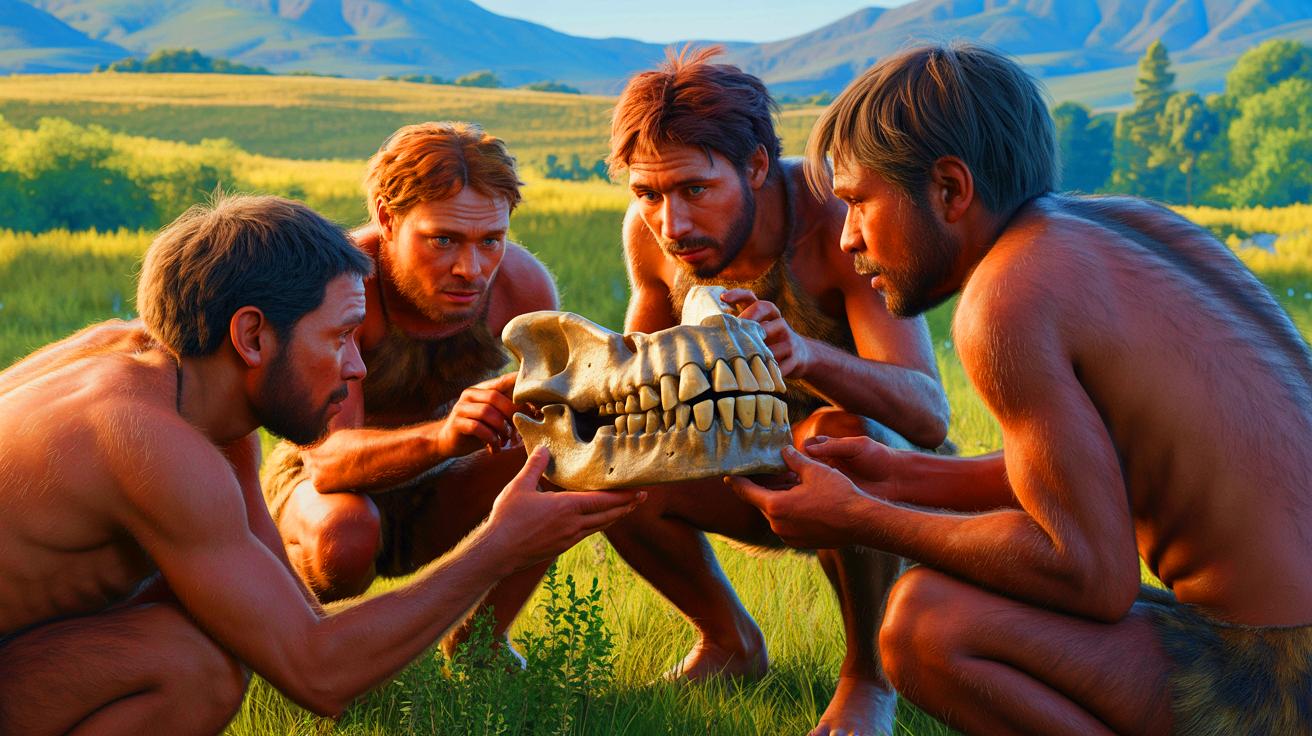
The intricate dance between behavior and evolution has long intrigued scientists. A recent study from Dartmouth College has shed light on this complex relationship by examining ancient teeth. This groundbreaking research offers the first direct evidence from the human fossil record that behavior significantly influences evolutionary change. By daring to adopt new diets and lifestyles, our ancestors may have paved the way for the unique evolutionary path of humans. This phenomenon, known as “behavioral drive,” suggests that the choices made by our ancestors had profound impacts over thousands of years.
The Intricacies of Behavioral Drive
Behavioral drive is a concept where shifts in behavior trigger evolutionary changes. Pioneering scientists like Charles Darwin and Ernst Mayr argued that when a species adopts a new behavior, such as venturing into a new habitat or altering its diet, it faces new challenges that can shape its evolutionary trajectory. This idea posits that behavior can actively influence physical evolution. However, proving this theory through fossil records has been a formidable challenge.
Nathaniel Dominy, an anthropology professor at Dartmouth, highlights the difficulty of linking behavior to morphological changes. He notes that anthropologists often infer behaviors from physical traits. However, these traits can take millennia to manifest in the fossil record. Thus, the real story of how our ancestors adapted and thrived might be hidden if we only focus on bones. To truly understand behavioral drive, researchers needed a method to measure behavior independently from physical traits.
Decoding the Dietary Diary
The breakthrough came through the chemical analysis of fossilized teeth. Teeth, like time capsules, capture the dietary habits of ancient creatures. They retain chemical signatures from consumed plants, offering insights into past diets. By analyzing carbon isotopes in tooth enamel, scientists can discern whether ancient humans consumed leafy vegetation or grass-like plants known as graminoids.
The Dartmouth team applied this technique to explore a peculiar dietary shift in primates around four million years ago. Several primates, including ancient human ancestors, began consuming grass despite lacking the typical adaptations seen in grass-eating animals. This discovery allowed researchers to track behavior—dietary shifts—independently of physical traits. It provided a new understanding of behavioral drive in human evolution.
Unveiling Astonishing Findings
The study unveiled remarkable findings. Chemical signatures in teeth revealed that ancient humans began consuming grasses long before their teeth evolved for such a diet. Luke Fannin, the study’s lead author, discovered that this dietary transformation occurred approximately 700,000 years before evolutionary adaptations appeared in their teeth. This indicates that early humans were driven by behavior rather than biology for an extended period.
Fannin emphasizes that this flexibility in behavior was a crucial evolutionary advantage. It demonstrates that behavior itself can be a powerful force of evolution, significantly impacting the morphological and dietary evolution of hominins. This insight challenges traditional views of evolutionary processes, highlighting the importance of adaptive behavior in shaping human history.
The Shift to Underground Banquets
The narrative of dietary evolution becomes even more intriguing around 2.3 million years ago. At this point, isotope ratios in the teeth of early human ancestors, like Homo rudolfensis, indicated a dramatic dietary shift. Researchers propose that this change was driven by the discovery of underground plant parts, such as tubers and bulbs. These starchy, carbohydrate-rich foods provided a reliable, year-round energy source.
This dietary innovation, facilitated by simple stone tools, allowed early humans to access a nutritious food source with minimal competition from other animals. Fannin suggests that this shift to underground foods marked a pivotal moment in human evolution, offering a stable energy supply that supported growing bodies and expanding brains. This further underscores the role of behavioral drive in human evolution, as our ancestors adapted their foraging strategies to exploit these valuable resources.
The Legacy of Adaptability
Over millions of years, the adaptability of human ancestors outpaced their physical evolution. While other primates experimented with grass diets, hominins paired their dietary changes with tool use and cognitive development. This combination of behavioral flexibility and innovation set the human lineage apart.
Eventually, evolutionary changes caught up with behavior. Around 2 million years ago, teeth of later human ancestors began to evolve, reflecting their long-standing dietary habits. This evolution, coupled with the discovery of fire, further enhanced their ability to digest tough foods. Nathaniel Dominy notes that the ability to exploit grass tissues may be humanity’s “secret sauce.” The risk taken by our ancestors to explore new food sources has had profound implications, shaping the evolutionary journey that led to modern humans.
The study of ancient teeth offers a fascinating glimpse into the interplay between behavior and evolution. It highlights the profound impact of adaptability on human history. As we reflect on the past, we must consider how our current behaviors might influence future evolutionary paths. What choices will define the next chapter of human evolution?


Wow, this is mind-blowing! Who would’ve thought teeth could tell us so much about our ancestors? 🦷
So, are we saying that humans were basically stubborn eaters? 😂
Interesting read! But isn’t it risky to rely solely on chemical signatures from teeth?
Why were early humans eating grass? Was there nothing else available? 🤔
This article really makes me appreciate my modern diet! Thanks for the insights!
Are there any other examples of behavioral drive in the animal kingdom?
How reliable is this method of studying ancient diets through teeth? Seems a bit indirect.
Kudos to the researchers for their innovative approach! 👏
Does this mean our ancestors had a balanced diet? Or were they just surviving? 🤷♂️