


| IN A NUTSHELL |
|
The limits of human lifespan have long intrigued scientists and the public alike. Recent research may have brought us closer to understanding this complex issue. A study published in Nature Communications suggests that human resilience, or the body’s ability to recover from illness or injury, declines irreversibly between the ages of 120 and 150. After reaching this point, even minor health setbacks may become impossible to overcome, potentially marking the boundary of human longevity. This research draws on extensive health datasets and mathematical modeling, providing a clearer picture of what might determine the ultimate limits of human life.
Understanding Human Resilience
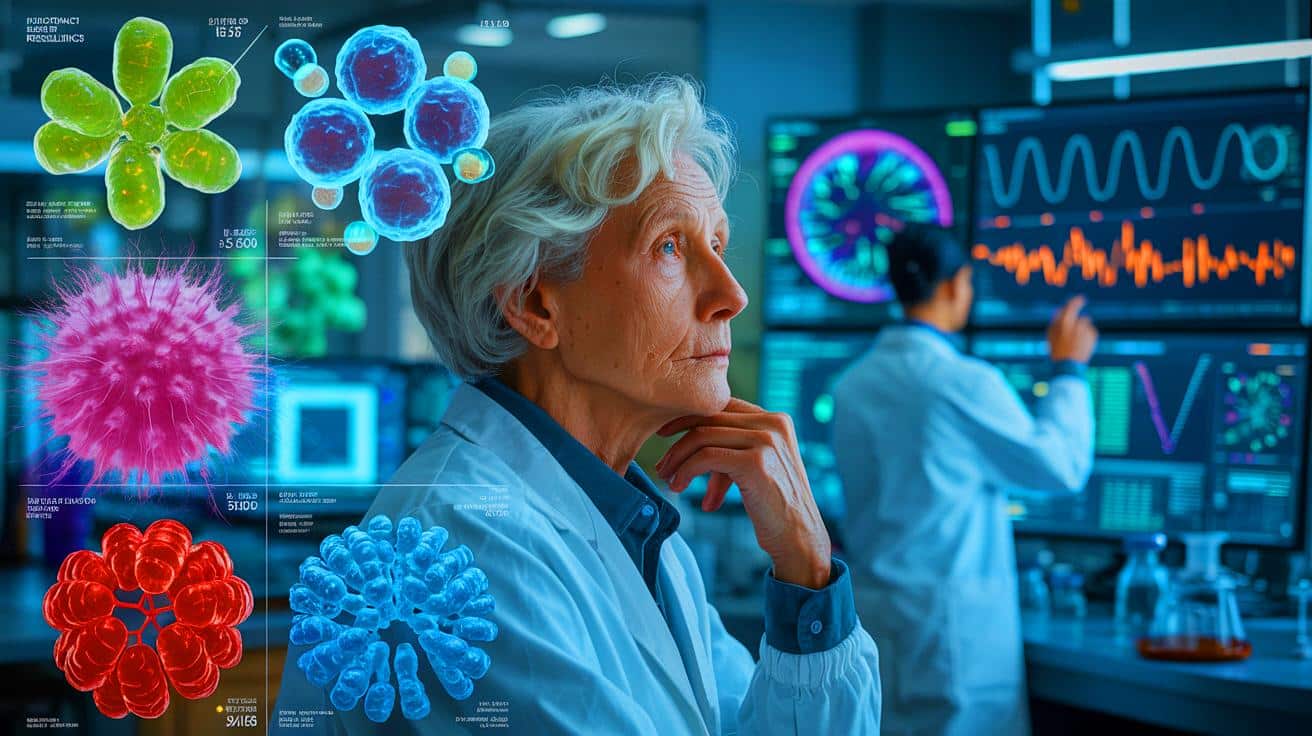
Researchers from Singapore, New York, and Moscow have embarked on a groundbreaking study to quantify human resilience. They analyzed anonymized medical data from over half a million individuals in the United States, United Kingdom, and Russia. By focusing on biomarkers of aging—specifically, the ratio of certain immune cells and the variability in red blood cell size—they identified indicators that change predictably as we age. These biomarkers serve as biological clues, akin to graying hair, that chart the course of aging.
Through these biomarkers, the scientists developed the Dynamic Organism State Indicator (DOSI), a tool to measure biological age and predict recovery speed from physical stress. According to Dr. Marc J. Kahn, who was not part of the study, the issue is straightforward: as people age, recovery times increase until resilience is lost. This loss of resilience, as calculated by DOSI, aligns with a lifespan boundary between 120 and 150 years. The study also validated these findings using physical activity data, noting a decline in movement among older participants.
Overcoming challenges: Stories of student resilience in 2025
The Challenge of Quality of Life
The notion of living up to 150 years is captivating, but experts emphasize that longevity without quality of life poses significant challenges. Judith Campisi from the Buck Institute for Research on Aging highlights the societal implications of health in old age. Longer lifespans without corresponding health improvements could strain medical systems and inflate costs. The focus, therefore, should not only be on extending life but also on enhancing resilience in old age.
Research into increasing resilience suggests futuristic solutions, like mechanical organs and cellular reprogramming. These ideas, though reminiscent of science fiction, are gaining traction as legitimate areas of study. Such advancements could potentially transform aging, offering a healthier, more active later life. However, achieving this balance between longevity and quality of life remains a complex challenge for researchers and policymakers alike.
The Individual Nature of Longevity
While the study’s modeling provides insights into human lifespan limits, it’s crucial to acknowledge the individual nature of aging. Genetics, income, diet, environment, and healthcare access all play roles in determining longevity. Furthermore, the research data, focused on three countries, might not reflect global patterns. Despite these limitations, the findings suggest a likely upper boundary for human life, barring significant biological changes.
As Judith Campisi succinctly put it, “For sure, we’re all going to die.” This statement underscores the inherent uncertainty in predicting lifespan limits. The quest to understand these boundaries continues to evolve, with researchers seeking to reconcile individual variances with broader trends in human aging.
Human Evolution Shocked by Dangerous Dietary Shift Experts Warn
Historical Context and Future Prospects
Historical research has explored similar themes regarding human lifespan. A 2016 study by Jan Vijg estimated that humans are unlikely to live beyond 125 years. However, other scientists argue that no fixed limit exists, pointing to advances in medicine, genetics, and lifestyle that could extend longevity. Various modeling approaches have been employed to define human lifespan boundaries, but results vary based on datasets and assumptions.
While the exact upper limit remains debated, most studies converge on a lifespan boundary within the range identified by the latest research. This convergence suggests a consensus on the potential limits of human life, while also leaving room for future discoveries and innovations that could push these boundaries further.
Implications for Society and Healthcare
If scientists succeed in extending human resilience, the implications could be profound. Longer, healthier lives would mean not just increased lifespans, but also enhanced quality of life in later years. Improved recovery in old age could help maintain independence, reduce caregiver burdens, and lower healthcare costs. Such changes would transform the concept of aging from a period of decline to a more dynamic and fulfilling stage of life.
These advances would also necessitate shifts in retirement planning, workforce participation, and social systems. If 80-year-olds possess the health of today’s 60-year-olds, economies and communities will need to adapt to new aging paradigms. How societies respond to these potential changes will shape the future of aging and longevity.
The study of human lifespan limits continues to evolve, raising important questions about the intersection of longevity, health, and societal adaptation. As science pushes the boundaries of what is possible, how will we redefine the concept of aging, and what new challenges and opportunities will this present for future generations?

Isn’t 150 years a bit optimistic given our current lifestyle choices? 🤔
Great article! Thanks for shedding light on such a fascinating topic.
So basically, we’re all doomed after 150? That’s reassuring! 😅
Could technological advances like AI and biotechnology extend this limit further?
What about the quality of life for those living close to 150? Seems more important.
I can’t even imagine living that long! What would you do with all that time?