



| IN A NUTSHELL |
|
The quest to establish human life beyond Earth has long captured the imagination of scientists and the general public alike. With the rapid advancements in space exploration, researchers are increasingly focusing on the practicalities of building sustainable human colonies on other planets. At the forefront of this movement are scientists from the University of Central Florida (UCF), who are pioneering efforts to terraform Mars and explore the possibilities of life in the skies of Venus. These initiatives aim to not only secure the future of human civilization but also push the boundaries of scientific discovery, challenging what we know about habitability and survival in space.
Redesigning Mars into a Habitable World
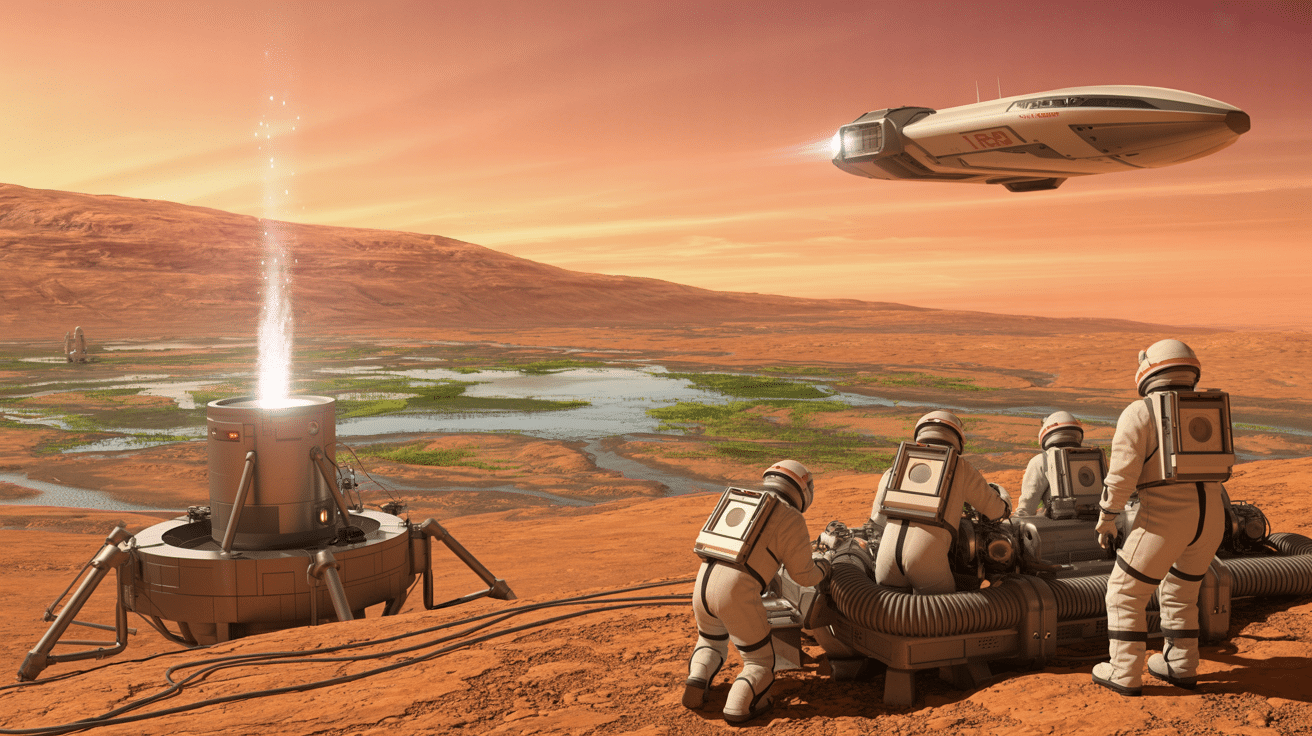
Researchers at UCF, led by Planetary Scientist and Astrobiologist Ramses Ramirez, are exploring the potential of terraforming Mars. The process involves altering the Martian environment to make it more Earth-like, thereby supporting human life. Ramirez’s approach focuses on using Martian nanoparticles to heat the planet’s surface, enabling the presence of liquid water and plant life. By studying Mars’ ancient climate, which once featured valleys and rivers, Ramirez aims to determine whether the planet still harbors essential resources for life.
Ramirez’s research raises critical questions about Mars’ potential for habitability. If the planet’s resources are lacking, alternative solutions will need to be developed to fill these gaps. “Does Mars still have enough of those resources that it once did?” Ramirez asks, emphasizing the importance of understanding the planet’s past to shape its future. His goal is not only to find life on Mars but also to create conditions where humanity can thrive.
Terraforming Mars
The extreme cold on Mars presents a significant challenge for human life, with average temperatures plummeting to minus 80 degrees Fahrenheit. To combat this, Ramirez proposes using Martian dirt to cultivate microscopic nanorods that can trap solar energy and create a greenhouse effect. These nanorods are 5,000 times more efficient than previous methods, providing a cost-effective and sustainable way to warm the planet.
This innovative technique could raise temperatures to 30 degrees Fahrenheit, allowing ice to melt and simple plant life to flourish. The approach is adaptable to other planets, utilizing different atmospheric materials like water vapor or carbon dioxide. Ramirez describes the potential to sustain Earth-like life by creating conditions with adequate warmth, pressure, and low toxicity. This research not only offers a path to making Mars habitable but also expands our understanding of planetary engineering.
Finding Food in Martian Soil
Beyond heating the planet, sustaining a human colony on Mars requires reliable food sources. Researchers have been developing Mars soil simulants to study plant growth under Martian conditions. Missions like Viking, Curiosity, and Perseverance have discovered organic molecules on Mars, suggesting that the planet once supported vegetation or microorganisms.
These findings fuel the hypothesis that early Martian conditions may have been conducive to life. While no fossils have been found, the presence of organic compounds points to a potentially vibrant past. Ramirez believes that understanding these conditions is crucial for developing sustainable agriculture on Mars. By leveraging the planet’s existing resources, scientists can work towards creating a self-sustaining ecosystem capable of supporting human life.
Powering Life Beyond Earth
Sustaining life on Mars necessitates a constant power source. Solar power has proven effective for rovers, but the planet’s dust storms and long nights pose challenges for consistent energy supply. NASA is investigating nuclear fission devices capable of providing 40 kilowatts of continuous power for up to a decade, offering a reliable energy solution for Martian habitats.
Mars’ day length is similar to Earth’s, making solar energy a viable option. However, planets like Venus require more innovative approaches due to their slow rotation and dense atmospheres. Proposed solutions include solar planes floating in Venus’ upper atmosphere, collecting sunlight and transferring energy to surface landers via laser power. This ambitious concept could enable long-duration missions in otherwise inhospitable environments, expanding the possibilities for human exploration beyond Earth.
Floating Above the Clouds of Venus
Despite its harsh conditions, Venus presents intriguing opportunities for colonization. While its surface pressure is 90 times that of Earth, the atmosphere 31 miles above ground level is surprisingly Earth-like. Scientists envision floating cities or research stations in these clouds, providing a unique vantage point for studying climate change and other phenomena.
Venus’ proximity to Earth makes it an attractive target for exploration, with shorter and more cost-effective trips. The planet’s thick atmosphere offers protection from cosmic radiation, and its carbon dioxide gases could be converted into oxygen to support life. However, challenges remain, such as dealing with corrosive atmospheric acids. Ramirez emphasizes the importance of safety and adaptability, stating, “That way, if things go wrong, astronauts there would be safe.” The vision of a floating city on Venus is not only about engineering feats but also about the imaginative potential for human survival.
The research into terraforming and colonization holds profound implications for the future of humanity. By developing techniques to create habitable environments on Mars and Venus, scientists are paving the way for long-term human settlement beyond Earth. These advancements also offer insights into addressing climate change and resource management on our home planet. As we push the boundaries of what is possible, the question remains: How will these innovations shape our understanding of life and survival in the universe?