



| IN A NUTSHELL |
|
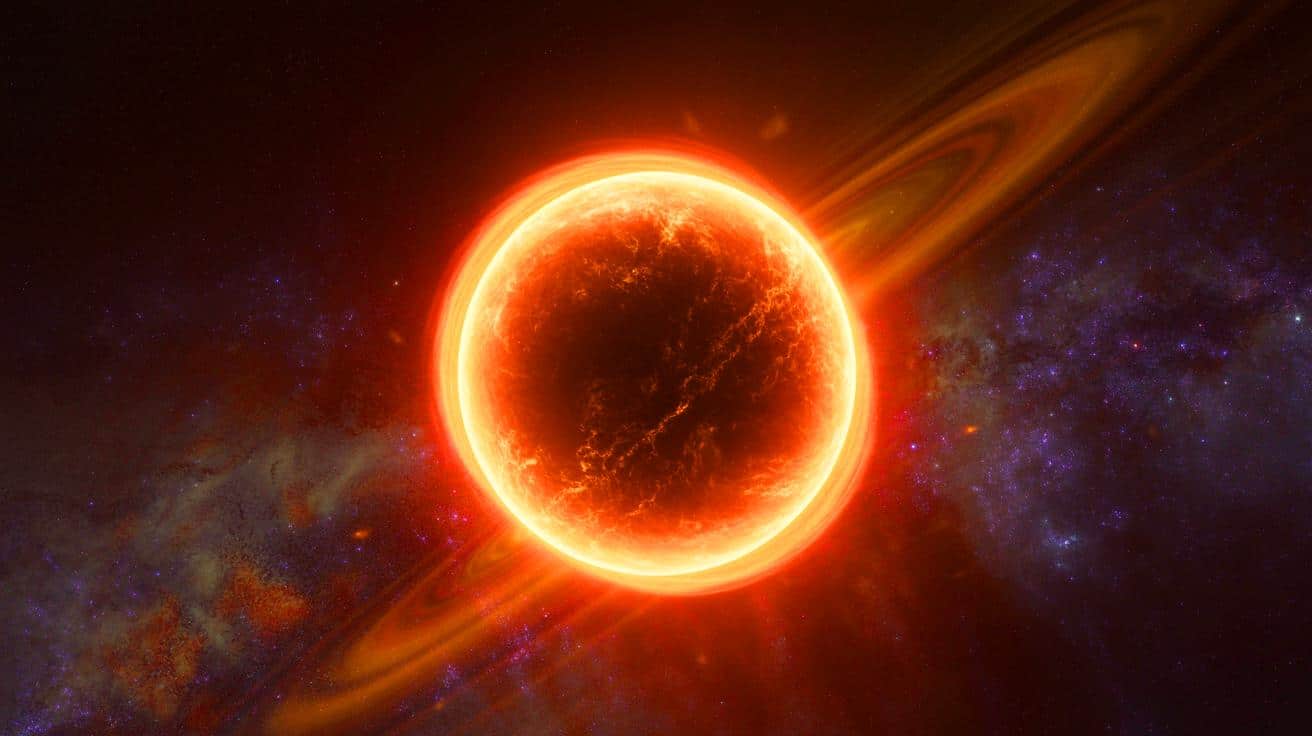
In a groundbreaking discovery that challenges conventional astronomical understanding, scientists have identified a rogue planet undergoing an unprecedented phase of explosive growth. Officially named Cha J11070768-7626326, or Cha1107-7626, this planet-mass object is unlike anything observed before. It is not tethered to any star, yet it has exhibited a dramatic accretion burst, a phenomenon typically associated with young stars or brown dwarfs. This event, still unfolding, has captivated the scientific community, prompting a reevaluation of the distinctions between stars and planets. As researchers continue to observe this celestial spectacle, questions about the nature and formation of such rogue planets abound.
A Burst Beyond Expectations
The recent activity around Cha1107-7626 has taken the astronomical community by surprise. From April to August 2025, telescopes worldwide observed the object brightening significantly, marking the first recorded accretion burst from a planet-mass object. This phenomenon typically occurs in young stars or brown dwarfs, making its presence in Cha1107-7626 all the more remarkable. At its peak, the accretion rate was an astounding six billion tons per second, setting a new record for planet-sized bodies.
Víctor Almendros-Abad from Italy’s National Institute for Astrophysics highlighted the significance of this discovery, stating, “This is the most powerful accretion event ever witnessed for a planet-mass object.” The findings challenge the traditional view of planets as serene, peaceful entities. Instead, they reveal that planet-mass objects, especially those unbound to stars, can be dynamic and volatile.
“People may have notions of planets as being serene and peaceful worlds, but with this discovery, we understand that planet-mass objects floating naked in space are exciting places too.”
Watching the Fireworks
The initial detection of the outburst came from the Very Large Telescope’s X-shooter spectrograph, which noted a surge in visible light in late June. The James Webb Space Telescope (JWST) further confirmed this phenomenon, capturing the outburst across a broad spectrum. The accretion rate observed was six to eight times greater than previous measurements, akin to what is typically seen in much larger young stars.
The event not only shed light but also altered the chemistry surrounding Cha1107-7626. For the first time, water vapor appeared around a planet-mass object, a feature previously associated with stars. Methane and ethylene signatures also shifted during the outburst, indicating significant changes in the disk’s composition. However, not all elements were affected; silicate dust remained stable, suggesting certain parts of the disk were resistant to change.
This mix of transformation and stability offers new insights into planet formation processes, challenging existing models and sparking further investigation into the nature of these celestial bodies.
Melting the Distinction Between Stars and Planets
The discovery of Cha1107-7626 reignites a long-standing debate: do rogue planets form through the same processes as stars, or are they ejected giants from other systems? The presence of accretion behaviors similar to young stars in this object suggests a potential overlap in formation mechanisms.
Aleks Scholz from the University of St Andrews poses the critical question: “How rogue planets form remains an open question: are they lowest-mass objects formed like stars, or are they ejection giant planets from their place of formation?”
Belinda Damian, another astronomer from St Andrews, notes that this discovery “smudges the line between planets and stars.” By observing such behaviors in Cha1107-7626, scientists gain invaluable insights into the early stages of rogue planets, offering a glimpse into their formative periods.
This finding blurs the lines between celestial categories, emphasizing the need for a reevaluation of how we classify and understand these objects.
A Familiar Pattern in a Strange Place
The continuous outbursts from Cha1107-7626 mirror those seen in EXor-type stars, which experience periodic increases in brightness and accretion rates. These characteristics, previously thought exclusive to young star systems, are now observed in a planet-sized object.
Amelia Bayo from the European Southern Observatory encapsulates the significance of this revelation: “The fact that a planet object can behave like a star is surprising and encourages us to wonder what other worlds will be like in their early stages.”
Positioned about 620 light-years away in the Chamaeleon constellation, Cha1107-7626 presents an opportunity for long-term study. Future observations with advanced telescopes like the Extremely Large Telescope and the James Webb Space Telescope will further illuminate the nature of these rogue planets.
As astronomers continue to monitor this extraordinary object, its behavior challenges preconceived notions about the distinct categories of stars and planets.
Practical Implications of the Research
This discovery provides a new perspective on the formation and evolution of celestial bodies. By demonstrating that planet-sized objects can undergo similar growth bursts as stars, scientists are prompted to reconsider existing theories of planetary and stellar formation.
The findings also highlight how accretion bursts can alter the chemical makeup of disks, potentially influencing the environments in which planets form. This has significant implications for our understanding of planetary systems beyond our own.
Upcoming advancements in telescopic technology will make it easier to identify and study rogue planets, offering insights into their origins and the diversity of celestial systems. As research continues, scientists anticipate that these revelations will reshape our understanding of the cosmos.
As we deepen our exploration of these mysterious rogue worlds, what new insights might they reveal about the universe and our place within it?